What are prediction markets? How event contracts work
What prediction markets are, how yes/no contract prices work as probabilities, Kalshi vs Polymarket, fees, legal fights in the US and the main risks.
CryptoGroup Newsroom · · 6 min read
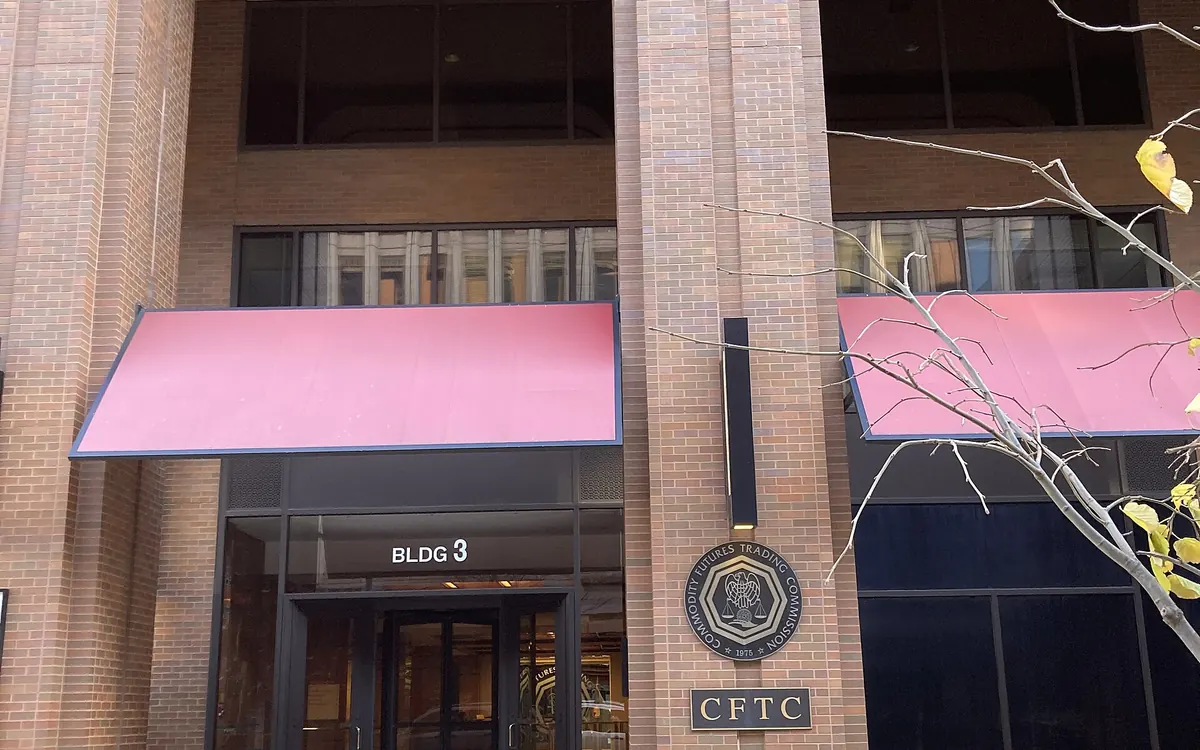
A prediction market is a marketplace where people buy and sell contracts on whether something will happen: an election result, a central bank decision, a sports score or bitcoin's price at a set time. Each contract asks a yes-or-no question and pays out a fixed amount if the answer turns out to be "yes". Because thousands of traders put money behind their views, the contract price becomes a running estimate of how likely the event is.
Prediction markets have grown from a niche academic tool into a mainstream product. Kalshi alone has handled more than $291 billion in trading volume this year, according to The Block, and brokers and crypto wallets are now plugging them into their apps, as Phantom did this week.
How a prediction market works
Most markets use binary event contracts. Take the question "Will the Fed cut rates at its next meeting?":
- Two sides. A "yes" share pays $1 if the Fed cuts and $0 if it doesn't. A "no" share pays the reverse.
- Prices between 1 and 99 cents. If "yes" trades at $0.62, "no" trades at roughly $0.38; together they add up to about $1, minus the spread.
- Trading before the event. You can buy, sell or exit at any time before the market closes. Prices move as news arrives.
- Resolution. After the event, the operator (or an oracle) declares the outcome. Winning shares are paid $1, losing shares expire worthless.
On most regulated venues you are not betting against the house. The exchange matches buyers and sellers, and makes money from fees or the spread.
Reading prices as probabilities
The neat trick of a prediction market is that price equals implied probability. A "yes" share at 62 cents implies the crowd sees about a 62% chance of the event. If you think the true chance is higher, buying "yes" is a positive bet in your eyes; if lower, you buy "no".
A worked example: you buy 100 "yes" shares at $0.62 for $62.
- If the event happens, you receive $100, a profit of $38 before fees.
- If it doesn't, you lose the full $62.
Two caveats. First, prices include fees and the bid-ask spread, so thinly traded markets can show misleading "probabilities". Second, a market price reflects what traders with money at stake believe, not certainty: a 62% outcome still fails nearly four times in ten.
Types of prediction markets
- Politics and elections: the original use case; also the most controversial, as polls show many voters dislike betting on elections.
- Economics: interest-rate decisions, inflation prints, jobs data. At Robinhood, the Fed's rate decision was the largest single event contract in September.
- Sports: the biggest category by volume on several US platforms, and the one facing the most legal pushback.
- Prices of assets: "Will bitcoin be above $X at 4 p.m.?" Some crypto contracts now settle in as little as 15 minutes, as Robinhood told a conference this week.
- Culture, science and tech: award shows, product launches, weather.
Regulated exchanges vs crypto-native markets
| Regulated US exchange (e.g. Kalshi) | Crypto-native market (e.g. Polymarket) | |
|---|---|---|
| Oversight | CFTC-regulated exchange | Depends on the platform and country |
| Account | KYC identity checks | Crypto wallet; KYC on regulated versions |
| Money | US dollars (some apps fund with stablecoins) | Stablecoins such as USDC on a blockchain |
| Outcome decided by | The exchange, under its published rules | Rules plus an on-chain oracle or dispute process |
| Main extra risk | State lawsuits can restrict markets | Smart-contract, oracle and wallet risk |
The oldest regulated example is the Iowa Electronic Markets, a small University of Iowa research market that has run since 1988 under a CFTC no-action letter. Kalshi became a fully regulated US exchange and, after a 2024 court victory over the CFTC, began listing election contracts. Polymarket grew as a crypto platform settling in USDC; it paid a CFTC penalty in 2022 and blocked US users, then built a separate US-regulated platform after buying a licensed exchange.
Crypto rails matter because stablecoins move around the clock and can fund trades in seconds. That is why wallets like Phantom and operators like Underdog are adding crypto funding, but it also means wallet security becomes part of the risk.
The legal fight in the United States
Federally, event contracts on a regulated exchange fall under the Commodity Futures Trading Commission. Many states argue that sports and some other contracts are simply gambling and must follow state betting laws, licences and taxes. Federal appeals courts have split on the question, and companies including Crypto.com and Novig are suing Missouri over orders to stop offering sports contracts. Until the courts settle it, platforms may hide some markets in certain states. Outside the US, rules vary widely; in many countries these products are treated as gambling or are unavailable.
Risks to understand before trading
- Fees and spreads: small per-contract fees add up, and wide spreads in quiet markets eat into any edge.
- Liquidity: you may not be able to exit at a fair price before the event.
- Resolution risk: vague wording or disputed outcomes can resolve against you, especially where an oracle decides.
- Platform and custody risk: on crypto venues, a hacked wallet or buggy contract can mean lost funds; read how to store crypto safely.
- Insider trading: people with private information can trade; regulated exchanges ban this and some have punished it, but it is hard to police.
- Taxes: treatment differs by country and is often unclear; keep records.
Prediction markets can be a useful source of crowd forecasts even if you never trade. If you do trade, treat it as speculation with money you can afford to lose. This guide is information, not financial advice.
Frequently asked questions
Are prediction markets gambling?
Legally it depends on where you are. In the US, regulated exchanges say event contracts are financial derivatives under the CFTC, while many states argue sports and some other contracts are gambling. Courts have not settled the question.
How do prediction markets make money?
Most charge a fee per contract or take a share of the spread between buyers and sellers. On exchange-style platforms you trade against other users, not against the house.
What does a price of 70 cents mean?
It means traders collectively put the chance of the 'yes' outcome at roughly 70%. If it happens, each share pays $1; if not, it pays nothing.
Do I need crypto to use a prediction market?
No. Regulated exchanges such as Kalshi work in dollars. Crypto-native markets such as Polymarket use stablecoins, and some apps let you fund trades with stablecoins.
This article is for information only and is not financial advice. Crypto assets are volatile; do your own research. Read our disclaimer
More from Markets
View all →Read next

Interpol's Serengeti III: 1,462 arrests, crypto mines shut
Interpol says Operation Serengeti III across 21 countries recovered $105M, and Angolan police seized 2,000+ mining rigs. Five takeaways for crypto users.
What is a mining pool? How pooled bitcoin mining works
What a bitcoin mining pool is, how shares and payouts work, PPS vs FPPS vs PPLNS compared, decentralization concerns and how to choose a pool.

South Korea to treat stablecoins as payments under forex law
The Bank of Korea and the government aim to draft a Foreign Exchange Transactions Act amendment this year that would regulate stablecoins as a means of payment.