What is a mining pool? How pooled bitcoin mining works
What a bitcoin mining pool is, how shares and payouts work, PPS vs FPPS vs PPLNS compared, decentralization concerns and how to choose a pool.
CryptoGroup Newsroom · · 6 min read
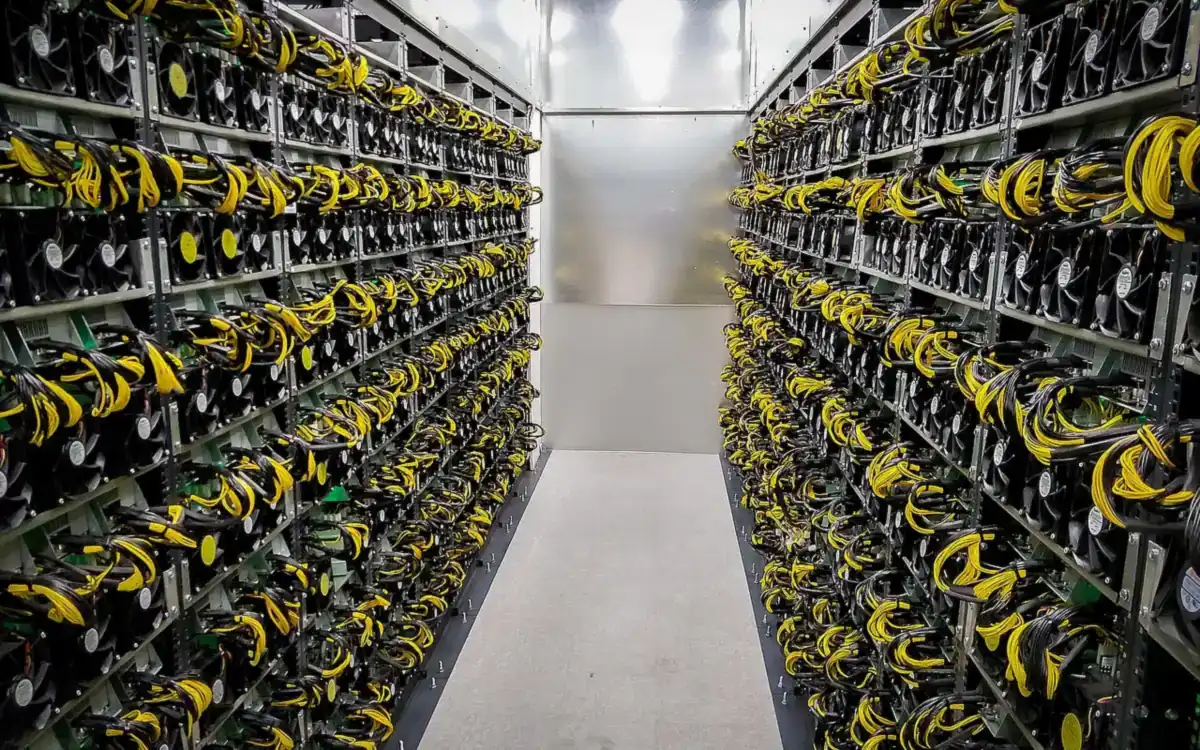
A mining pool is a group of bitcoin miners who combine their computing power and split the block rewards they earn together. Instead of one miner waiting years for a lucky hit, thousands of machines work as a single team and get paid small, regular amounts in proportion to the work they contribute. Almost all bitcoin mining today happens this way.
Why mining pools exist
In proof of work, miners race to find a block hash below a target set by the network. The winner of each block, found roughly every 10 minutes, collects the block subsidy (3.125 BTC since the April 2024 halving) plus transaction fees. Everyone else gets nothing for that round.
The odds for a small miner are brutal. Total network hashrate was about 1,050 EH/s this month, according to CryptoQuant data. A single modern ASIC miner producing around 200 TH/s holds roughly one five-millionth of that power. At about 52,500 blocks a year, simple maths says it would find a block about once a century on average — and it might be far sooner or far later. Pools turn that lottery into something closer to a salary.
How a pool works, step by step
- The pool builds the block template. Its servers pick transactions from the mempool and send miners a work package, usually over the Stratum protocol.
- Miners hash and submit "shares". A share is a hash that meets a much easier target set by the pool. Shares cannot win a block on their own, but they prove how much work each machine is doing.
- Someone finds the real block. Occasionally one share also meets the network's full difficulty. The block reward is paid to the pool's address, not to the individual miner who found it.
- The pool pays out. The operator takes its fee and distributes the rest according to its payout scheme, typically once a balance passes a minimum threshold.
Because every share is counted, it does not matter whose machine found the block. A miner with 1% of the pool's hashrate earns about 1% of the pool's rewards over time.
Payout schemes compared
| PPS | FPPS | PPLNS | |
|---|---|---|---|
| Name | Pay per share | Full pay per share | Pay per last N shares |
| What you get | Fixed amount per valid share | Like PPS, plus a share of expected transaction fees | A cut of each block the pool actually finds, based on your recent shares |
| Who carries the luck risk | The pool | The pool | You |
| Income pattern | Steady | Steady | Lumpy; can beat or lag PPS |
| Typical fees | Higher | Higher | Lower |
PPS and FPPS pay for every share whether or not the pool finds blocks, so the operator absorbs bad luck and charges more for it. PPLNS pays only when the pool wins, sharing out each block among the last N shares, which rewards miners who stay put and can be more profitable over long periods, but it is less predictable week to week. Some pools offer hybrids such as PPS+.
Mining pools and decentralization
Pools are a practical fix, but they create a concentration question. A handful of pools, led in recent years by Foundry USA and AntPool, account for most of bitcoin's hashrate. In 2014 the pool GHash.io briefly approached half of all hashrate, prompting miners to leave voluntarily.
Two things limit the risk. The pool operator does not own the machines: individual miners can point their hardware elsewhere in minutes, as Binance Pool's customers must do before it closes on 10 November. And newer software such as Stratum V2 lets miners build their own block templates, choosing which transactions go in, rather than leaving that to the pool. Adoption is still limited, but it moves an important power back to miners.
How to choose a mining pool
- Payout scheme and fee. Compare FPPS and PPLNS terms net of fees, not headline fees alone.
- Minimum payout and frequency. Low thresholds matter for small miners.
- Transparency. Look for public stats on blocks found, pool hashrate and luck.
- Server locations. Nearby servers mean lower latency and fewer stale shares.
- Account requirements. Some pools require identity checks; others need only a payout address.
- Track record. Pools can shut down or change terms, so do not let large balances sit unpaid.
There are also "solo" pool services, where you keep the whole block reward (minus a fee) if your own machine finds a block. That is a lottery ticket, not an income.
Is pool mining worth it?
Whether mining pays depends far more on your electricity price, hardware efficiency and bitcoin's price than on the pool. A pool smooths the income; it does not make an unprofitable setup profitable. If you simply want exposure to bitcoin, buying it is usually simpler — our guide on what bitcoin is covers the basics.
Frequently asked questions
What is a mining pool in simple terms?
A mining pool is a group of miners who combine their computing power to find blocks more often and share the rewards in proportion to the work each one contributes.
Do mining pools make you more money?
Not on average. Pools make income steadier and more predictable, but after fees the long-run expected reward is about the same or slightly lower than mining alone.
What is the difference between PPS and PPLNS?
PPS pays a fixed amount for every valid share, so the pool takes the luck risk. PPLNS pays only when the pool finds a block, based on your recent shares, so income is lumpier but fees are usually lower.
Can a mining pool steal my bitcoin?
A pool controls rewards until it pays them out, so unpaid balances are at risk if it fails or closes. Choose pools with a public track record and withdraw regularly.
Can you join a pool to mine Ethereum?
No. Ethereum stopped mining when it moved to proof of stake in September 2022. Pools still exist for proof-of-work coins such as bitcoin, litecoin and dogecoin.
This article is for information only and is not financial advice. Crypto assets are volatile; do your own research. Read our disclaimer
More from Bitcoin
View all →Read next

Bitcoin is now as jumpy as Nvidia, and 8x the euro
Bitcoin's 90-day realized volatility is about 38%, near Nvidia's 37% but far above gold, the S&P 500 and EUR/USD. What calmer swings do and don't mean.

South Korea to treat stablecoins as payments under forex law
The Bank of Korea and the government aim to draft a Foreign Exchange Transactions Act amendment this year that would regulate stablecoins as a means of payment.

Bitcoin Core drops embargoes for bugs AI can find in one prompt
Bitcoin Core will patch 'easily discoverable' vulnerabilities right away in every maintained version, saying AI makes such flaws too easy to rediscover to keep secret.