What is bitcoin? How BTC works, explained for beginners
What bitcoin is, who created it, how mining, the 21 million cap and halvings work, what gives BTC value, the main risks and how people buy and store it safely.
CryptoGroup Newsroom · · 7 min read
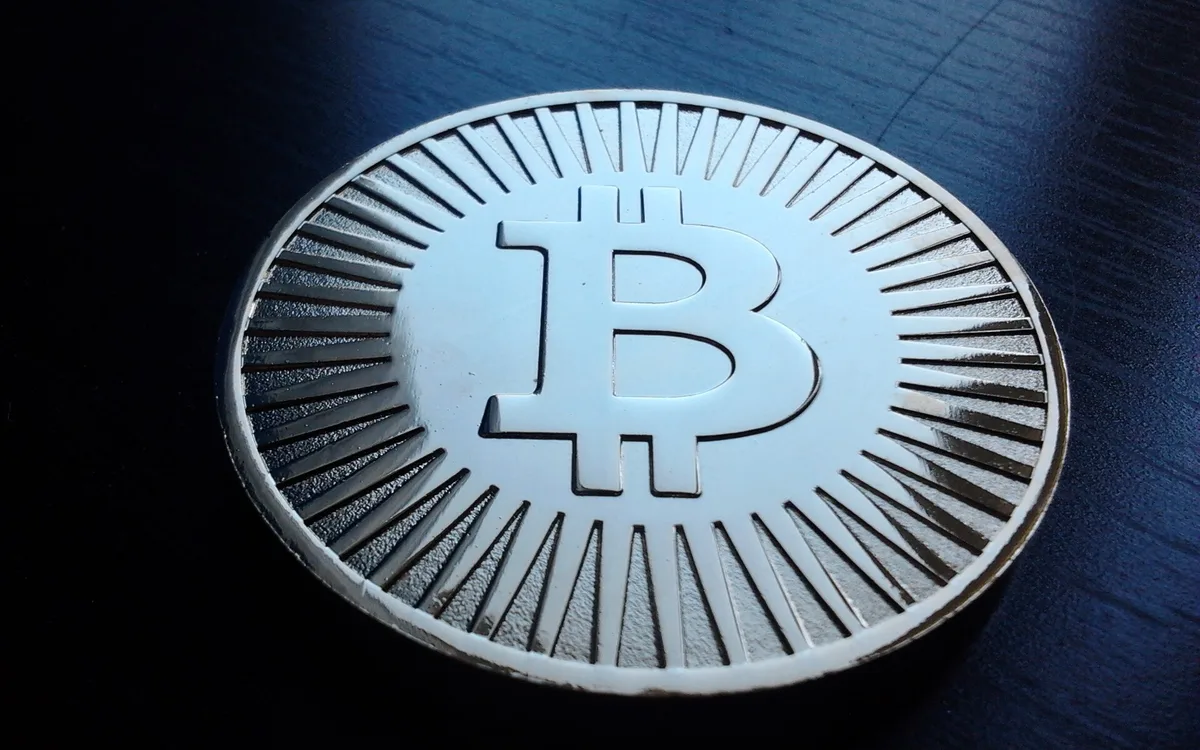
Bitcoin (BTC) is a digital currency that lets people send value to each other over the internet without a bank, payment company or government in the middle. Every transaction is recorded on a public ledger called the blockchain, which is copied and checked by thousands of independent computers around the world. Nobody can print extra bitcoin, freeze the network or reverse a confirmed payment on their own.
This guide explains where bitcoin came from, how it works under the hood, why people value it, the risks, and the practical basics of buying and storing it. It is educational and not investment advice.
Where bitcoin came from
Bitcoin was described in a nine-page white paper, Bitcoin: A Peer-to-Peer Electronic Cash System, published on Oct. 31, 2008 by a person or group using the name Satoshi Nakamoto. The network went live on Jan. 3, 2009, when the first block, known as the genesis block, was mined. Satoshi stopped communicating publicly around 2011, and their identity has never been confirmed.
The timing mattered. The paper arrived during the global financial crisis, and the genesis block contains a newspaper headline about a bank bailout. Bitcoin's pitch was money whose rules are fixed in software and enforced by its users, not set by institutions.
How bitcoin works
Think of bitcoin as three pieces that fit together:
- The ledger (blockchain). Transactions are grouped into blocks, roughly one every 10 minutes. Each block references the one before it, forming a chain. Changing an old transaction would mean redoing all the work on every block after it, which is what makes the history so hard to rewrite.
- The nodes. Anyone can run free software that downloads the whole ledger and checks every rule: no coin spent twice, no more coins created than allowed, every signature valid. Nodes reject anything that breaks the rules, so no single party can change them.
- The miners. Miners compete to add the next block by running specialised machines that make trillions of guesses per second, a process called proof of work. The winner earns newly issued bitcoin plus the fees users attached to their transactions. Every 2,016 blocks (about two weeks) the network adjusts the difficulty so blocks keep arriving about every 10 minutes, however much computing power joins. We compare this with Ethereum's approach in proof of work vs proof of stake.
Mining is now an industrial business: total network computing power recently recovered to around 1,050 EH/s, with public miners running large data centres.
Keys, addresses and "owning" bitcoin
You do not hold bitcoin as a file. Instead, the ledger records which coins can be spent by which private key, a secret number that only the owner should know. From the private key you derive public addresses that others can send BTC to. Spending means signing a transaction with the private key; nodes check the signature without ever seeing the key itself.
Wallet apps hide most of this and give you a seed phrase — usually 12 or 24 words — that can restore all your keys. Anyone with that phrase controls the funds, which is why the saying "not your keys, not your coins" exists. Our explainer what is a seed phrase covers how to back one up safely.
Supply: 21 million and the halving
Bitcoin's monetary policy is written into its code:
- The total supply is capped at just under 21 million BTC. More than 19.9 million have already been mined; the last fractions are expected around the year 2140.
- New bitcoin enters circulation only as the block subsidy paid to miners. Every 210,000 blocks, roughly every four years, the subsidy is cut in half — the halving. It started at 50 BTC per block; after the April 2024 halving it is 3.125 BTC.
- Each bitcoin divides into 100 million units called satoshis ("sats"), so you can buy a small amount such as $10 worth.
Changing these rules would require most of the network's users to adopt new software voluntarily, which is why the cap is considered credible.
What gives bitcoin value?
Bitcoin has no issuer, earnings or government backing. Its price comes from what buyers will pay, and supporters point to a few properties: a fixed and predictable supply, resistance to censorship and seizure when self-custodied, a 24/7 global market, and an operating history stretching back to 2009. Many treat it as "digital gold", a long-term store of value, rather than as everyday cash.
Since January 2024, investors in the US can also get exposure through spot bitcoin ETFs, which hold BTC on their behalf; our guide bitcoin ETF vs buying bitcoin compares the two routes. If you are deciding between the two largest crypto assets, see bitcoin vs ethereum.
What you can do with bitcoin
- Hold it as a long-term savings asset.
- Send it to anyone in the world, at any hour, usually confirmed within an hour on the main chain.
- Pay small amounts quickly over the Lightning Network, a layer built on top of bitcoin for near-instant, low-fee payments.
- Use it as collateral in some lending products — always with extra counterparty risk.
The main risks
- Volatility: large and fast price swings are normal.
- Loss and theft: forgetting a seed phrase or falling for a phishing site can wipe out holdings. Learn the warning signs in how to spot crypto scams.
- Platform risk: coins left on an exchange depend on that company staying solvent and honest.
- Regulation and tax: rules differ by country and keep changing; many tax authorities treat selling or spending BTC as a taxable event.
- Long-term technical questions: debates such as whether future quantum computers could break bitcoin are being worked on, but not yet settled.
How people buy and store bitcoin
Most beginners buy through a regulated exchange or broker, paying by bank transfer or card, then decide where to keep the coins. Our step-by-step guide how to buy bitcoin walks through it. For storage, small amounts often stay in a reputable mobile wallet, while larger sums usually go to a hardware wallet kept offline. The trade-offs are summed up in how to store crypto safely.
Frequently asked questions
Who controls bitcoin?
No single person or company. The rules are enforced by thousands of independent nodes, and changes only happen if most users choose to run updated software.
Do I have to buy a whole bitcoin?
No. Each bitcoin divides into 100 million satoshis, so most platforms let you buy small amounts worth a few dollars.
Is bitcoin anonymous?
It is pseudonymous. Addresses are not names, but every transaction is public forever, and exchanges that verify identity can link addresses to people.
What happens when all 21 million bitcoin are mined?
Miners will be paid only by transaction fees. That point is expected around 2140, because the halving makes new issuance smaller and smaller.
Can bitcoin be hacked?
The network has run since 2009, and serious early bugs, such as a 2010 flaw that briefly created extra coins, were fixed quickly. Most losses today come from hacked exchanges, scams and stolen or lost keys.
This article is for information only and is not financial advice. Crypto assets are volatile; do your own research. Read our disclaimer
More from Bitcoin
View all →Read next

Bitcoin tests $81,500 ETF cost basis as Iran talk hits stocks
Bitcoin fell about 3% to near $81,300 as Trump's Iran remarks and AI jitters sank stocks, testing the $81,500 average cost basis of US spot bitcoin ETF buyers.

Thailand SEC: crypto ETF interest, but no applications yet
A week after Thailand's Bitcoin and Ether ETF rules took effect, the SEC says several asset managers have asked about launches but none has filed, and 2026 timing is unclear.
Uniswap v4 becomes an aggregator as hooks go live on 3 chains
Uniswap's aggregator hooks now route swaps through Curve, Fluid, PancakeSwap and other venues on Ethereum, Base and Robinhood Chain, with fees feeding UNI burns.