South Korea to treat stablecoins as payments under forex law
The Bank of Korea and the government aim to draft a Foreign Exchange Transactions Act amendment this year that would regulate stablecoins as a means of payment.
CryptoGroup Newsroom · · 3 min read
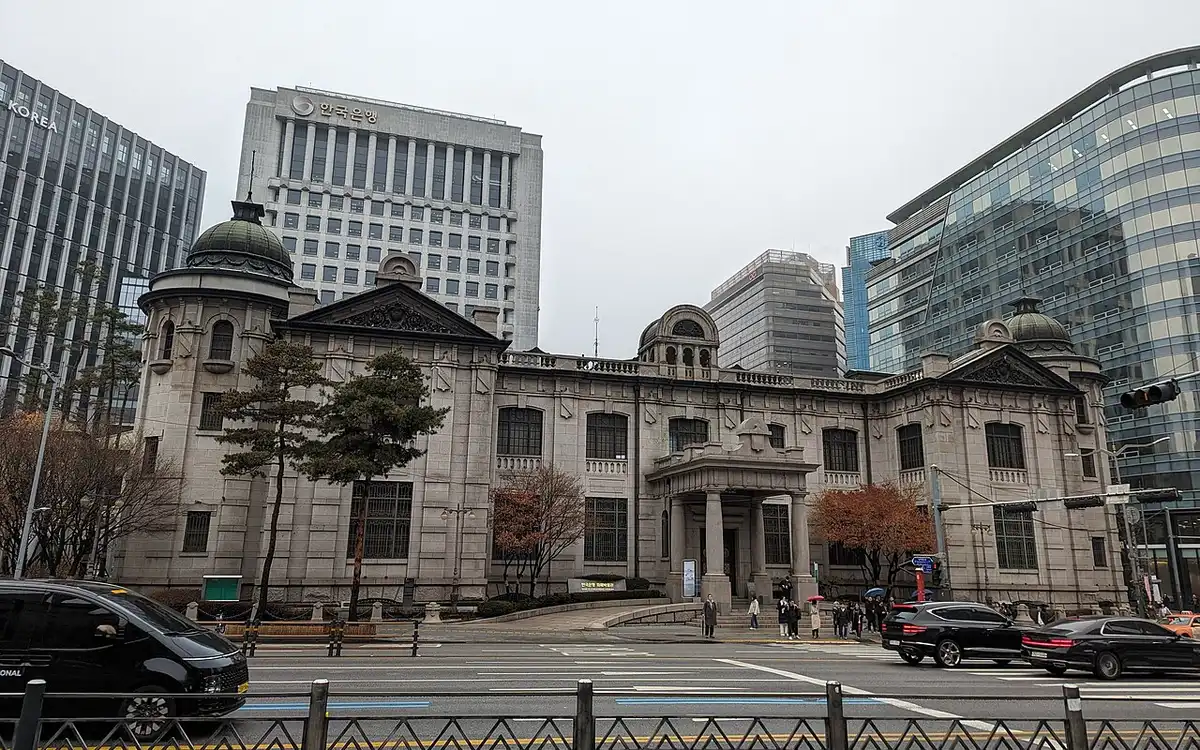
South Korea's government and central bank plan to amend the country's Foreign Exchange Transactions Act this year so that stablecoins are regulated as a means of payment, according to local outlet Digital Asset, as reported by The Block. The Bank of Korea set out the plan in materials prepared for this year's parliamentary audit.
What the Bank of Korea said
- It is coordinating with the government on rules for cross-border digital-asset transactions.
- It intends to draft, jointly with the government and within this year, a forex-law amendment covering stablecoins as payment instruments, alongside a monitoring system for virtual assets that includes reporting through the forex data network.
- It flagged the risks it wants to address: payments that bypass financial institutions, cross-border transfers, and anonymity tools such as mixers and unhosted wallets.
Why the forex law matters
Korea's Foreign Exchange Transactions Act decides which instruments count as "means of payment" and must be reported when money crosses the border. Stablecoins currently fall outside that list, so a user can send dollar-pegged tokens abroad without the reporting a bank transfer would trigger. Lawmakers have called this a blind spot for illegal FX dealing and tax evasion. Bringing stablecoins inside the definition would put them in the same supervisory net as other ways of paying across borders.
Three tracks, not one
Korea's crypto rule-making in progress
Oct 2025
Lawmaker's bill filed
A bill to count currency-linked stablecoins as a means of payment under the forex law was filed and is still in committee.
Jun 2026
Transfer-business amendment promulgated
Crypto firms that move assets between Korea and abroad must register with the finance ministry; the law takes effect on Dec. 3, 2026.
Oct 2026
Government drafting begins
The Bank of Korea says it will prepare a stablecoin payment amendment with the government this year; the FSC says the Digital Asset Basic Act is nearly finished.
The bigger piece is the Digital Asset Basic Act, which would set licensing rules for exchanges and for stablecoin issuance. Financial Services Commission chairman Lee Eog-weon told lawmakers on Thursday that discussions on it were nearing completion. The Bank of Korea says it will keep consulting other ministries so that firms cannot exploit gaps while that act is still in the works.
What is still unknown
No draft has been published, so it is not yet clear how "means of payment" will be defined, which transfers would need reporting or who would have to file. Nothing in the plan approves stablecoin payments in Korea; it is about supervision. Readers following the global picture can compare it with the US approach in our explainer on the GENIUS Act and with Asia's cross-border pilots, where Malaysia and Thailand just joined Singapore's stablecoin push.
This article is for information only and is not financial advice. Crypto assets are volatile; do your own research. Read our disclaimer
More from Regulation
View all →Read next
What is a mining pool? How pooled bitcoin mining works
What a bitcoin mining pool is, how shares and payouts work, PPS vs FPPS vs PPLNS compared, decentralization concerns and how to choose a pool.

Bitcoin is now as jumpy as Nvidia, and 8x the euro
Bitcoin's 90-day realized volatility is about 38%, near Nvidia's 37% but far above gold, the S&P 500 and EUR/USD. What calmer swings do and don't mean.

Bitcoin Core drops embargoes for bugs AI can find in one prompt
Bitcoin Core will patch 'easily discoverable' vulnerabilities right away in every maintained version, saying AI makes such flaws too easy to rediscover to keep secret.