How to spot crypto scams: 10 red flags to know
Guaranteed returns, task jobs, fake support, crypto ATM demands and pre-set wallets: the 10 most common crypto scam warning signs and what to do if you're hit.
CryptoGroup Newsroom · · 6 min read
On this page
- Guaranteed or unusually high returns
- A stranger brings up crypto
- You're paid for easy online tasks, then asked to deposit
- Someone asks for your recovery phrase
- Pressure, urgency and secrecy
- You can deposit, but withdrawals cost "fees" or "taxes"
- Giveaways and celebrity impersonation
- You're told to pay at a crypto ATM
- Pre-set wallets, lookalike apps and links
- "Recovery experts" who promise to get your money back
Crypto scams rarely look like scams at first. They arrive as a friendly message, a well-paid side job, a helpful "support agent" or an investment app with a slick dashboard. Because blockchain payments are fast and usually irreversible, the money is often gone before the victim realises what happened. Americans alone reported $11.4 billion in crypto fraud losses in 2025, up 22% on the year before, according to FBI figures cited by Bloomberg (our report).
The good news: almost every scheme relies on the same handful of tricks. Learn these red flags and you will recognise most of them early.
Guaranteed or unusually high returns
No legitimate investment can promise a fixed daily or weekly profit, and nobody can guarantee that a crypto price will rise. Phrases such as "risk-free", "2% a day" or "double your bitcoin" are a warning, not an offer. Real markets move both ways — bitcoin can lose 10–20% in a week.
A stranger brings up crypto
A "wrong number" text, a dating match or a new friend on social media who slowly steers the chat toward a trading platform they "made a fortune on" is the classic opening of a long-con investment scam. These schemes can run for weeks to build trust before any money is mentioned. Be wary of anyone you have only met online who wants to talk about your finances.
You're paid for easy online tasks, then asked to deposit
Task scams offer money for liking videos, rating hotels or "boosting" product sales. The first payouts are real and small. Then a "negative balance" or a "combination task" appears, and you are told to deposit your own crypto to unlock your earnings. You never get it back. This exact pattern funded the wallet in the recent tampered Ledger theft.
Someone asks for your recovery phrase
Your 12- or 24-word recovery (seed) phrase is the master key to your wallet. No exchange, wallet maker, support team or government agency will ever need it. Anyone who asks — by message, phone, email or a form on a website — is trying to empty your wallet. The same goes for private keys and for remote-access apps that let someone "help" you on your screen.
Pressure, urgency and secrecy
"The offer closes tonight", "your account will be frozen", "don't tell your bank — they'll block it". Scammers create time pressure so you skip the moment of doubt, and they ask for secrecy so nobody talks you out of it. A genuine opportunity will still be there after you sleep on it and ask someone you trust.
You can deposit, but withdrawals cost "fees" or "taxes"
Fake trading platforms show impressive gains on screen, but the numbers are invented. When you try to withdraw, you are asked to pay a tax, an "unlock fee" or a verification deposit first — and then another. A real platform deducts fees from your balance; it does not demand fresh money before releasing your own. Check that any exchange is licensed in your country before depositing (our guide on how to buy bitcoin covers what to look for).
Giveaways and celebrity impersonation
"Send 0.1 ETH and get 0.2 ETH back" is never real, whoever's face is in the video. Deepfake livestreams, hacked verified accounts and lookalike profiles of founders and celebrities are common. Treat every giveaway that asks you to send crypto first as a theft attempt.
You're told to pay at a crypto ATM
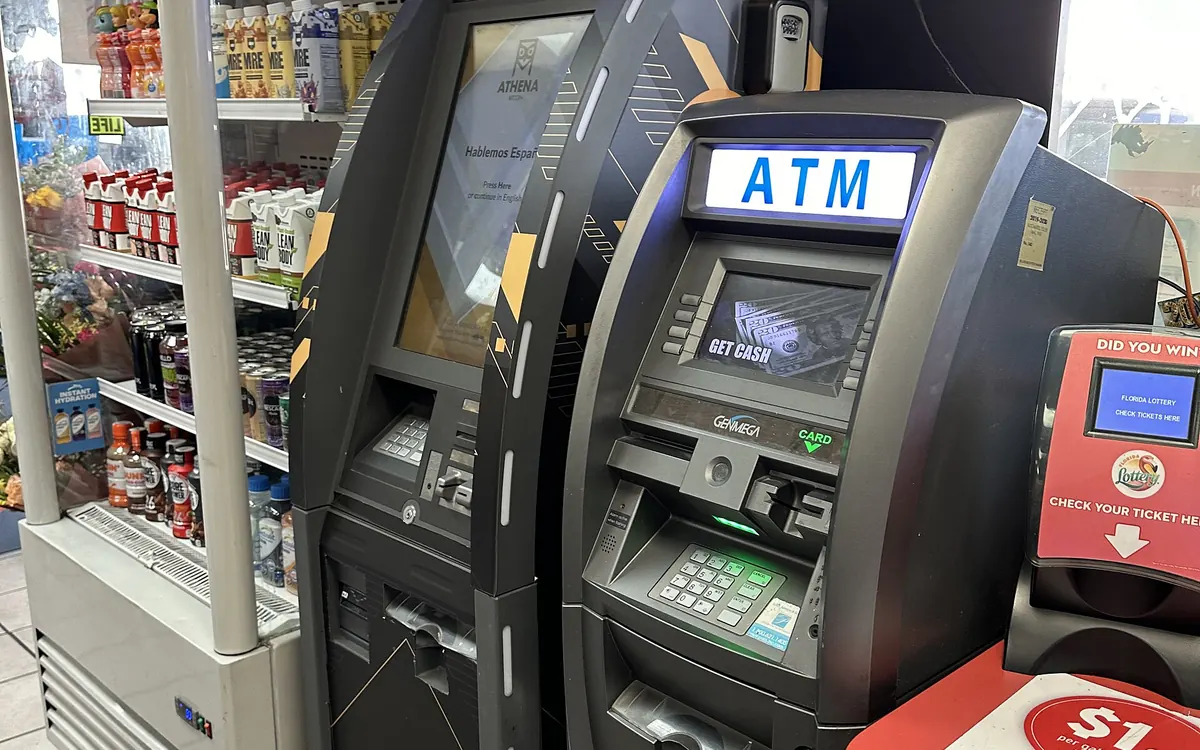
Callers posing as police, tax officials, utility companies or a bank's fraud team sometimes instruct victims to withdraw cash and feed it into a bitcoin ATM, often while staying on the phone. No legitimate authority collects payments through crypto ATMs. Hang up and call the organisation back on a number you find yourself.
Pre-set wallets, lookalike apps and links
A hardware wallet that arrives with a recovery phrase already printed or filled in, or that comes from an unofficial reseller, may be compromised. Buy directly from the manufacturer, and make sure the device generates a new phrase during setup (what is a hardware wallet explains how setup should look). Online, fake wallet apps and phishing sites copy real brands closely: type addresses yourself, bookmark the real site and double-check every character of a receiving address.
"Recovery experts" who promise to get your money back
After a loss, victims are often contacted by "asset recovery" firms or "blockchain lawyers" who charge an upfront fee to retrieve stolen funds. This is usually a second scam aimed at the same person. Real investigations go through the police and official channels, which do not charge you to open a case.
For day-to-day protection, keep only small amounts on exchanges and follow the steps in how to store crypto safely.
Frequently asked questions
Can a crypto transaction be reversed if I was scammed?
Usually not. Blockchain transfers are final, so a payment can only be recovered if the funds reach a platform that freezes them, which is why reporting quickly to the exchange and police matters.
Will a real exchange ever ask for my seed phrase?
No. Exchanges, wallet makers and support teams never need your recovery phrase. Anyone who asks for it is trying to take your funds.
Are bitcoin ATMs scams?
The machines themselves are legal in many places, but scammers often tell victims to pay through them. No police force, tax office or utility will ask you to pay at a crypto ATM.
How do I check if a crypto platform is legitimate?
Look it up in your financial regulator's public register, search for independent reviews and warnings, and be suspicious of platforms you found through social-media ads or a stranger's recommendation.
This article is for information only and is not financial advice. Crypto assets are volatile; do your own research. Read our disclaimer
More from Security
View all →Read next

Goldman, Wells Fargo, Morgan Stanley bet on tokenization
Q3 earnings calls showed how Goldman Sachs, Wells Fargo and Morgan Stanley each expect to profit from tokenization: more trading, faster payments, more advice.

Ether margin longs on Bitfinex climb as prices stall
Bitfinex traders hold about 367,500 ETH in margin longs against under 9,000 ETH in shorts, while bitcoin and ether trade flat into a quiet Saturday evening.

Fidelity's Solana health check: reliable, but too concentrated
Fidelity's FCAT says Solana has gone two years without a major outage, yet 18 validators, one host and two EU cities hold an outsized share of its stake.