What is a seed phrase? Recovery words explained
A seed phrase is the 12 or 24 words that can rebuild your crypto wallet. Learn how it is generated, why randomness matters and how to back it up safely.
CryptoGroup Newsroom · · 6 min read
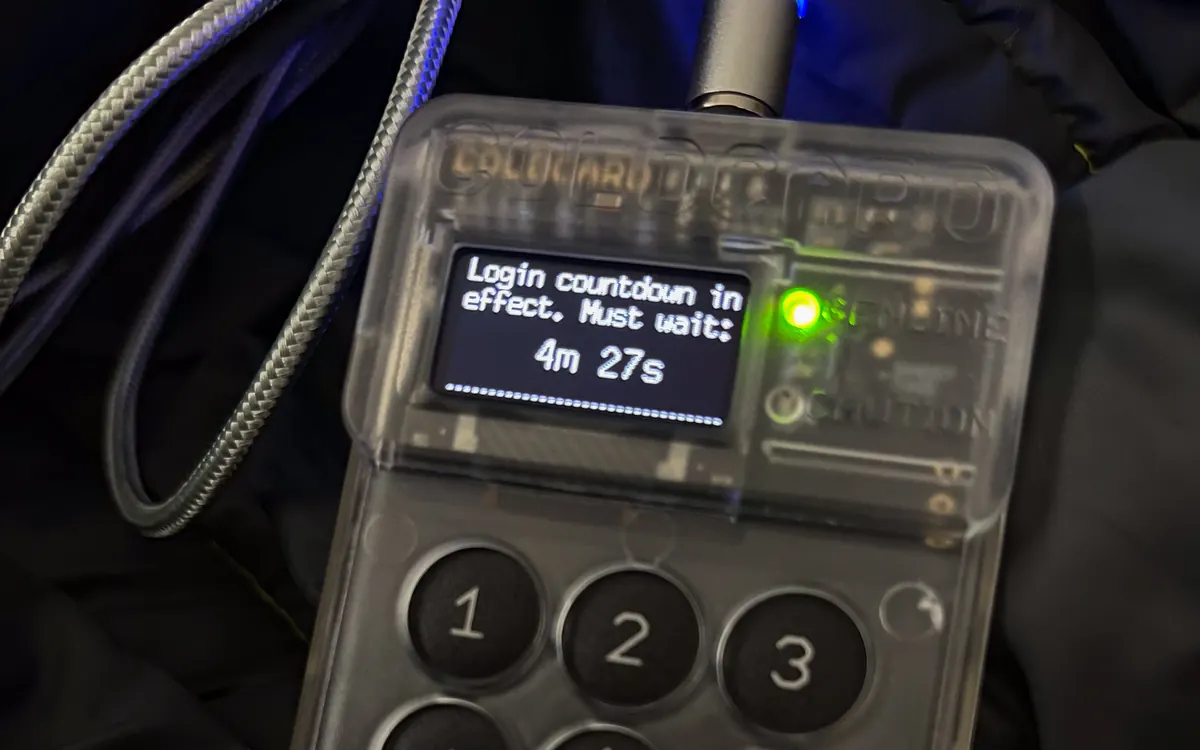
A seed phrase, also called a recovery phrase or mnemonic, is a short list of ordinary words, usually 12 or 24, that your wallet shows you once when you create it. Those words are a human-readable form of the master secret from which every private key and address in the wallet is derived. If your phone breaks or your hardware wallet is lost, typing the same words into a compatible wallet rebuilds everything.
That convenience is also the risk: anyone who learns the words can rebuild your wallet too. This guide explains how seed phrases work, why the randomness behind them matters, and how to store one safely.
How a seed phrase is created
Most modern wallets follow a widely used standard known as BIP-39. The process, simplified:
- The wallet generates a large random number (128 bits for 12 words, 256 bits for 24 words).
- It adds a short checksum, so a mistyped word is usually caught.
- The result is split into chunks, and each chunk is mapped to a word from a fixed list of 2,048 words.
- From those words, the wallet derives a master key, and from that, a tree of keys for each coin and account. This is why one phrase can restore Bitcoin, Ethereum and other assets at once in wallets that support them.
The words themselves are not the secret in a magical sense; the randomness behind them is. With 2,048 possible words per slot, a properly generated 12-word phrase has so many combinations that guessing it is not realistic. The danger appears when the "random" number is not really random.
Why randomness is everything
In October 2026, the Qubic network lost about $1.4 million when an attacker reproduced wallet seeds that its web wallet had generated with a weak random-number generator on some Apple devices and browsers. The network code was fine; the seeds were predictable. We covered it in Qubic's restart and recovery claims.
The practical lessons:
- Create wallets only with reputable, up-to-date software or a hardware wallet bought direct from the maker.
- Never use a phrase someone else chose for you, a phrase printed on a card inside a box, or one generated on a website.
- Do not invent your own phrase from favourite words or song lyrics. Humans are terrible at randomness.
12 words or 24 words?
| 12 words | 24 words | |
|---|---|---|
| Underlying randomness | 128 bits | 256 bits |
| Practical security | Very strong if truly random | Larger safety margin |
| Ease of backup | Quicker to write and check | More words to record correctly |
| Common in | Many mobile and browser wallets | Many hardware wallets |
Either length is safe when generated correctly. What matters far more is how you store it.
The optional passphrase ("25th word")
Many wallets let you add a passphrase on top of the seed phrase. The same 24 words plus a different passphrase open a completely different wallet. This protects you if someone finds your written words, but it adds a new single point of failure: forget the passphrase and the funds are gone. Only use it if you can back it up as carefully as the phrase itself, and store the two separately.
How to store a seed phrase safely
+ Pros
- Paper written by hand, kept somewhere private and dry
- Stamped or engraved metal plates that survive fire and flood
- Two copies in two separate secure locations
− Cons
- Photos, screenshots or cloud notes
- Email, messengers or password managers synced online
- A single copy in one place
A few more rules worth following:
- Check the backup. Before sending large amounts, test that the words restore the wallet, ideally by restoring on the same hardware wallet or a trusted one.
- Keep it boring. Do not label the paper "crypto seed". Do not store it next to the device.
- Plan for inheritance. Someone you trust should know that the backup exists and how to reach it, without being able to use it alone.
For the wider picture of hot wallets, cold storage and exchanges, read our guide on how to store crypto safely and our explainer on what a hardware wallet is.
Seed phrase vs private key vs exchange password
A private key controls a single address. A seed phrase is the master backup that can regenerate all of a wallet's keys. An exchange password is different again: the exchange holds the keys, and you can reset the password through support. With a self-custody wallet there is no reset. That is the trade-off of holding your own keys: full control, full responsibility.
Frequently asked questions
Can I recover my crypto without the seed phrase?
Usually not. If the device still works you can make a new backup, but if both the device and the seed phrase are lost, a self-custody wallet generally cannot be recovered.
Is it safe to store my seed phrase in a password manager?
It is safer than a photo or a note, but it puts the phrase on internet-connected devices. Most security guides recommend an offline backup on paper or metal for significant amounts.
What should I do if someone may have seen my seed phrase?
Create a new wallet with a new seed phrase on a trusted device and move all funds to it as soon as possible. Changing a PIN does not help, because the old words still control the funds.
Do exchanges give you a seed phrase?
No. On a custodial exchange the company holds the keys. Seed phrases belong to self-custody wallets, including mobile, browser and hardware wallets.
This article is for information only and is not financial advice. Crypto assets are volatile; do your own research. Read our disclaimer
More from Security
View all →Read next
Malaysia's central bank launches SSDS+ for tokenized bonds
Bank Negara Malaysia launched SSDS+, a cloud and DLT platform for tokenized bonds and sukuk that settles 24/7 in central bank money via RENTAS+.

HSBC: Ripple Prime's 24/7 stock swaps face thin liquidity
HSBC calls Ripple Prime's 24/7 swaps on stocks, gold and oil 'evolutionary, not revolutionary', warning that thin markets may limit big institutional trades.

Mastercard opens AI agent payments to developers: how it works
Mastercard opened early access to Agent Pay for Machines, an x402-based system that lets AI agents pay for services within a human-set budget, settled via Base.