What is USDT (Tether)? How it works, risks and uses
USDT explained: how Tether's dollar stablecoin keeps its $1 price, what backs it, which networks it runs on, why addresses can be frozen and the key risks.
CryptoGroup Newsroom · · 7 min read
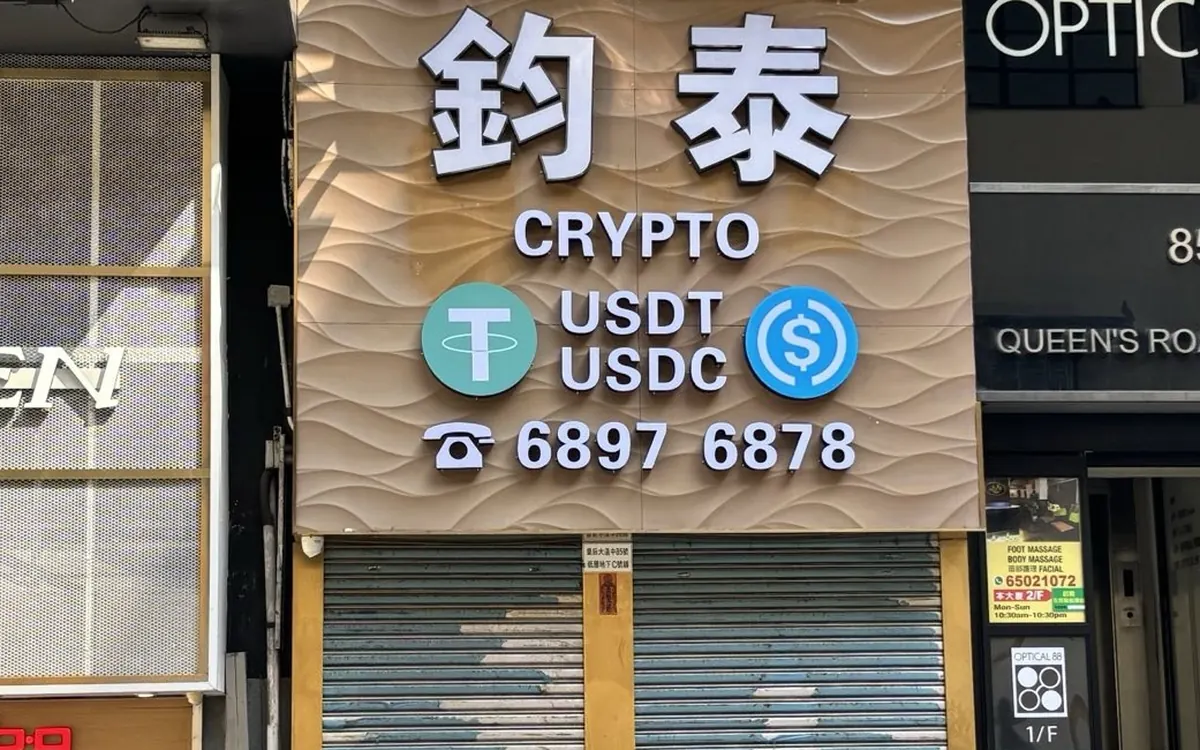
USDT, also called Tether, is a cryptocurrency designed to always be worth one U.S. dollar. It is issued by a company of the same name, lives on public blockchains such as Tron and Ethereum, and is the most widely used stablecoin in the world: traders use it as cash between trades, and millions of people use it to send or save dollars without a U.S. bank account. This guide explains how USDT works, what stands behind it and what can go wrong.
USDT in one paragraph
Each USDT is a token that Tether promises to redeem for $1. When a large customer sends Tether dollars, Tether mints new tokens; when the customer returns tokens, Tether burns them and pays out dollars. Because big players can always swap USDT for about a dollar through Tether, its market price stays close to $1 on exchanges. At our CoinGecko snapshot of 24 October 2026, USDT had a market value of about $182.5 billion, roughly two and a half times its closest rival, USDC.
Who issues USDT
Tether launched USDT in 2014, originally on a layer built on top of Bitcoin. The company is privately owned, moved its headquarters to El Salvador in 2025, and is led by CEO Paolo Ardoino. Besides issuing stablecoins it has become a large investor in bitcoin mining, AI and other businesses, funded largely by the interest its reserves earn.
Ordinary users rarely deal with Tether directly. Direct minting and redemption are reserved for verified, mostly institutional customers with high minimums; everyone else buys and sells USDT on exchanges or peer-to-peer.
What backs USDT
Tether says every token is backed by at least a dollar of assets. According to its quarterly reports, most of the reserves are U.S. Treasury bills, repurchase agreements and cash, with smaller amounts in gold, bitcoin and secured loans. The extra assets earn more but can also lose value.
Those reports are attestations by the accounting firm BDO: a check that the reserves existed on a single date, not a full audit of the business. Transparency has been a sore point for years. In 2021 Tether paid $41 million to settle U.S. CFTC claims that it had misstated its reserves in the past, and $18.5 million to settle with the New York Attorney General. For a side-by-side look at how this compares with Circle's USDC, see USDT vs USDC.
Which networks USDT runs on
USDT is not one coin on one chain. Tether issues separate versions on several blockchains, all meant to be worth $1, but they do not move between chains on their own.
| Network | Typical use | Fee paid in |
|---|---|---|
| Tron (TRC-20) | Exchanges, P2P trading, remittances; low fees | TRX |
| Ethereum (ERC-20) | DeFi apps, large transfers; higher fees | ETH |
| Solana | Fast, cheap payments and trading apps | SOL |
| TON | Telegram-based wallets and payments | TON |
The golden rule: the sending and receiving network must match. Sending Tron USDT to an Ethereum-only address is one of the most common ways people lose money. You also need a little of the network's own coin to pay the fee. Our step-by-step guide on how to store USDT covers networks and wallets in detail.
What people use USDT for
- Trading: most crypto pairs on global exchanges are quoted in USDT, so traders park money in it between trades instead of cashing out to a bank.
- Saving in dollars: in countries with high inflation or currency controls, USDT is an easy way to hold something tied to the dollar.
- Sending money: a USDT transfer on Tron settles in minutes, around the clock, often for about a dollar or less in fees.
- Payments and DeFi: some merchants accept it, and lending and trading apps use it as a base asset. Tether also invests in local payment apps, such as Bolivian fintech Peso, which runs USDT payments for food delivery and bank transfers.
Tether can freeze USDT
Unlike bitcoin, USDT has a central issuer that can blacklist addresses. Once frozen, tokens at that address cannot be moved. Tether uses this regularly at the request of law enforcement and after hacks — for example, it froze about 2.21 million USDT linked to the CoinDCX outflow this month. That protects victims in some cases, but it also means holding USDT in your own wallet does not make it censorship-proof.
The risks to know
- Issuer and reserve risk: USDT is only as good as Tether's assets and its ability to honour redemptions. It slipped to about $0.95 in May 2022 during the Terra collapse before recovering as Tether processed billions in redemptions.
- Regulation: USDT is not authorised under the EU's MiCA rules, so major exchanges have restricted it for users in the European Economic Area. In the U.S., the GENIUS Act sets new stablecoin rules from January 2027; Tether launched a separate U.S. token, USAT, with Anchorage Digital Bank.
- User mistakes: wrong network, wrong address and "address poisoning" (look-alike addresses planted in your history) cause many losses.
- Scams: fake "USDT mining" apps, "flash USDT" that disappears, and P2P sellers who reverse bank payments. Our guide on how to spot crypto scams lists the warning signs.
The bottom line
USDT is the closest thing crypto has to a global digital dollar: liquid, cheap to send and accepted almost everywhere outside the EU. In return you trust a single private company with your money and accept that it can freeze it. Know which network you are using, keep only what you need on exchanges, and treat any offer that sounds too good as a scam.
Frequently asked questions
Is USDT the same as one U.S. dollar?
It aims to be worth $1 and usually trades within a cent of that, but it is a token issued by a private company, not legal tender or a bank deposit. Its value depends on Tether's reserves and redemptions.
Who owns Tether?
Tether is a privately held company headquartered in El Salvador since 2025 and run by CEO Paolo Ardoino. It is not owned by a government or a bank.
Can Tether freeze my USDT?
Yes. Tether can blacklist any address holding USDT, which stops the tokens there from moving, even in a self-custody wallet. It usually does this after hacks or at the request of law enforcement.
What is the difference between USDT TRC-20 and ERC-20?
They are the same Tether dollar on different blockchains: TRC-20 is on Tron, with low fees paid in TRX; ERC-20 is on Ethereum, with higher fees paid in ETH. Always send on the network the receiving address supports.
Is USDT safe to hold?
It has kept its $1 value through several market crashes, but it carries issuer, regulatory and freeze risks that cash in a bank does not. Many people use it for trading and transfers rather than as long-term savings.
This article is for information only and is not financial advice. Crypto assets are volatile; do your own research. Read our disclaimer
More from DeFi
View all →Buying guide
USDT vs USDC: which stablecoin should you use?
Read next
House of Doge loses exclusive Dogecoin license: 5 key points
A House of Doge 8-K ends its exclusive Dogecoin Foundation license, owes $400,000, needs a new name by Dec. 31 and plans a $15M McQueen Labs deal.

Bitcoin back near $81,000 after $810M wipeout, Fed week next
Bitcoin recovered to about $80,900 on Sunday after a $79,146 low and $810M in liquidations. The Fed decides on Oct. 28; traders eye the $81,700 50-day average.
What is a rug pull in crypto? Types, red flags, checks
A rug pull is when a token's creators drain the money and vanish. Learn hard vs soft rugs, honeypots, red flags to check before buying and what to do if hit.