What is XRP? The XRP Ledger and Ripple, explained
What XRP is, how the XRP Ledger works without mining, how it differs from Ripple the company, why supply and the SEC case matter, and how to hold it safely.
CryptoGroup Newsroom · · 7 min read
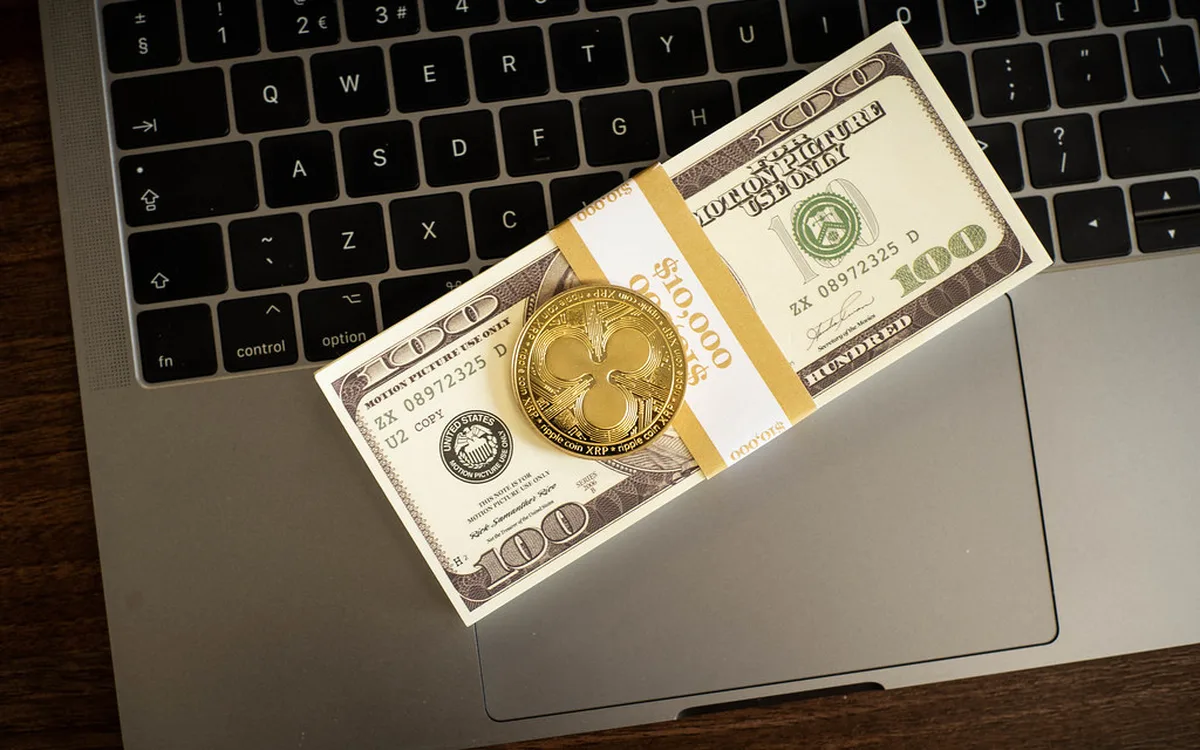
XRP is the native cryptocurrency of the XRP Ledger (XRPL), an open-source blockchain built for fast, cheap payments. It is one of the oldest and largest crypto assets, but it works very differently from bitcoin or ether, and it is often confused with Ripple, the company most closely tied to it. This guide explains what XRP is, how the ledger works, what XRP is used for and what to watch out for.
XRP, the XRP Ledger and Ripple: three different things
- The XRP Ledger is a public blockchain. Anyone can run a server, build on it or use it. It went live in 2012, designed by David Schwartz, Jed McCaleb and Arthur Britto.
- XRP is the ledger's built-in coin. It pays transaction fees, funds account reserves and can be sent between any two accounts.
- Ripple is a US fintech company. The founders gave it the bulk of the XRP supply, and it sells payment and custody services to banks and businesses, some of which use XRP. Ripple also issues the RLUSD stablecoin on the ledger.
Ripple is the biggest developer and holder in the ecosystem, but it does not own the network: the ledger's rules change only when independent validators vote for them, as you can see in the recent delay of an XRPL bug fix when votes fell short.
How the XRP Ledger works
Bitcoin uses mining and Ethereum uses staking to decide which transactions are valid. The XRP Ledger uses neither. It relies on the XRP Ledger Consensus Protocol:
- Servers called validators compare proposed transactions and agree on the next version of the ledger every 3–5 seconds.
- Each server chooses a list of validators it trusts, its Unique Node List (UNL). Most use a recommended default list, currently around 35 validators.
- Rule changes, called amendments, need support from more than 80% of trusted validators for two weeks in a row.
Because nobody is paid to validate, there are no block rewards and no new XRP is ever created. Each transaction burns a tiny fee (the minimum is 0.00001 XRP), which slowly reduces total supply and makes spam expensive. Every account must also hold a small reserve of XRP that cannot be spent, to stop people from filling the ledger with empty accounts.
For background on mining and staking, see our comparison of proof of work and proof of stake.
XRP vs bitcoin vs ether
| XRP | Bitcoin | Ether | |
|---|---|---|---|
| Launched | 2012 | 2009 | 2015 |
| How blocks are agreed | Validator consensus, no mining or staking | Proof of work (mining) | Proof of stake (staking) |
| Typical settlement | About 3–5 seconds | About 10 minutes per block | About 12 seconds per block |
| Supply | 100 billion created at launch, no new issuance | Capped at 21 million | No fixed cap |
| Main pitch | Payments, tokenized assets, stablecoins | Store of value | Smart contracts and apps |
Supply and the escrow
All 100 billion XRP were created when the ledger launched. The founders gave 80 billion to the company that became Ripple. In 2017 Ripple locked 55 billion in on-ledger escrow contracts that release up to 1 billion XRP a month; whatever Ripple does not use goes back into new escrow.
That steady release is one reason long-term holders have struggled. Circulating supply grew from about 38.7 billion in 2017 to around 63.1 billion, according to Nansen figures cited by CoinDesk, so a similar total market value is spread over many more coins. We covered this in detail in why XRP still trades below its 2018 peak.
What XRP is used for
- Cross-border payments. Ripple's payment service can use XRP as a bridge between two currencies, so a business does not need pre-funded accounts in every country.
- A built-in exchange. The XRP Ledger has had a decentralized order book since launch and added an automated market maker (AMM) in 2024. Many trading pairs route through XRP.
- Tokens and stablecoins. Anyone can issue tokens on XRPL. Ripple's dollar stablecoin RLUSD lives there, and fund managers have started to use it for tokenized funds, such as Franklin Templeton's $150 million top-up this week. New to stablecoins? Read what a stablecoin is.
- Escrow, payment channels and NFTs. These are native features, so they do not need separate smart contracts.
The SEC case and what it settled
In December 2020 the US Securities and Exchange Commission sued Ripple and two executives, saying XRP sales of about $1.3 billion were unregistered securities offerings. Several US exchanges paused XRP trading. In 2023 a federal judge ruled that XRP sold on exchanges to the public was not offered as a security, but Ripple's direct sales to institutions were. Ripple was ordered to pay a $125 million penalty in 2024, and both sides dropped their appeals in August 2025, ending the case. US spot XRP funds launched afterwards and have drawn about $1.8 billion, according to SoSoValue.
Price history in brief
XRP peaked at about $3.55 in early January 2018 on CoinDesk's data and briefly set a new high of about $3.66 in July 2025 before falling back. It has been far more volatile than its "payments" image suggests, so treat it like any other speculative crypto asset.
How to buy and store XRP
You can buy XRP on most large exchanges. To hold it yourself, use a wallet that supports the XRP Ledger, including several hardware wallets. Two XRPL-specific points:
- Account reserve: a new XRPL account must be funded with a minimum amount of XRP before it works, and that reserve cannot be sent away while the account is open.
- Seed phrase safety: the usual rules apply. Our guide on how to store crypto safely covers backups and common scams.
Risks to keep in mind
- Concentration: Ripple and its escrow still control a large share of supply.
- Validator list: most servers rely on a default list of validators, which critics say is more centralised than mining or staking.
- Regulation: the US case is over, but rules for tokens and stablecoins are still changing worldwide.
- Volatility: XRP can lose a large part of its value quickly. Nothing here is investment advice.
Frequently asked questions
Is XRP the same as Ripple?
No. XRP is the coin of the XRP Ledger, a public blockchain. Ripple is a company that holds a large amount of XRP, builds products on the ledger and issues the RLUSD stablecoin.
Can you mine XRP?
No. All 100 billion XRP were created when the ledger launched in 2012. Validators agree on transactions without mining or staking rewards.
How fast are XRP transactions?
The XRP Ledger closes a new ledger version every 3 to 5 seconds, and the fee is usually a tiny fraction of one XRP.
What is an XRP destination tag?
A number that tells an exchange which customer a deposit belongs to when many customers share one XRP address. Always include it when depositing to an exchange.
Is XRP still a security in the US?
A 2023 court ruling said XRP sold on exchanges to the public was not offered as a security, and the SEC case ended in 2025. Rules can still change, so check current guidance.
This article is for information only and is not financial advice. Crypto assets are volatile; do your own research. Read our disclaimer
More from Altcoins
View all →Read next

UAE-led sting flags $39B in scam-linked funds and crypto
Operation Confrontation Ghost, led by the UAE with 30 countries, Interpol and Crypto.com, brought 960+ arrests and flagged $39B+ in fraud-linked funds and crypto.

Bitcoin bets push Kalshi and Polymarket to a record $2.7B week
Crypto contracts on Kalshi and Polymarket hit a record $2.7B in weekly notional volume, mostly short-term bitcoin bets. Why the number is big, and what it isn't.
Kraken drops Monero withdrawal questionnaires, keeps XMR
Kraken withdrew emails asking Monero buyers what they planned to do with withdrawn XMR. Co-CEO Arjun Sethi says fund-source checks stay; that question was wrong.