Heatbit's $899 Bitwater mines bitcoin inside your water heater
Heatbit's Bitwater swaps a water-heater element for 20 Bitmain chips: up to 34 TH/s at 600 W, $899 preorders shipping Q1 2027. Specs, earnings and caveats.
CryptoGroup Newsroom · · 3 min read
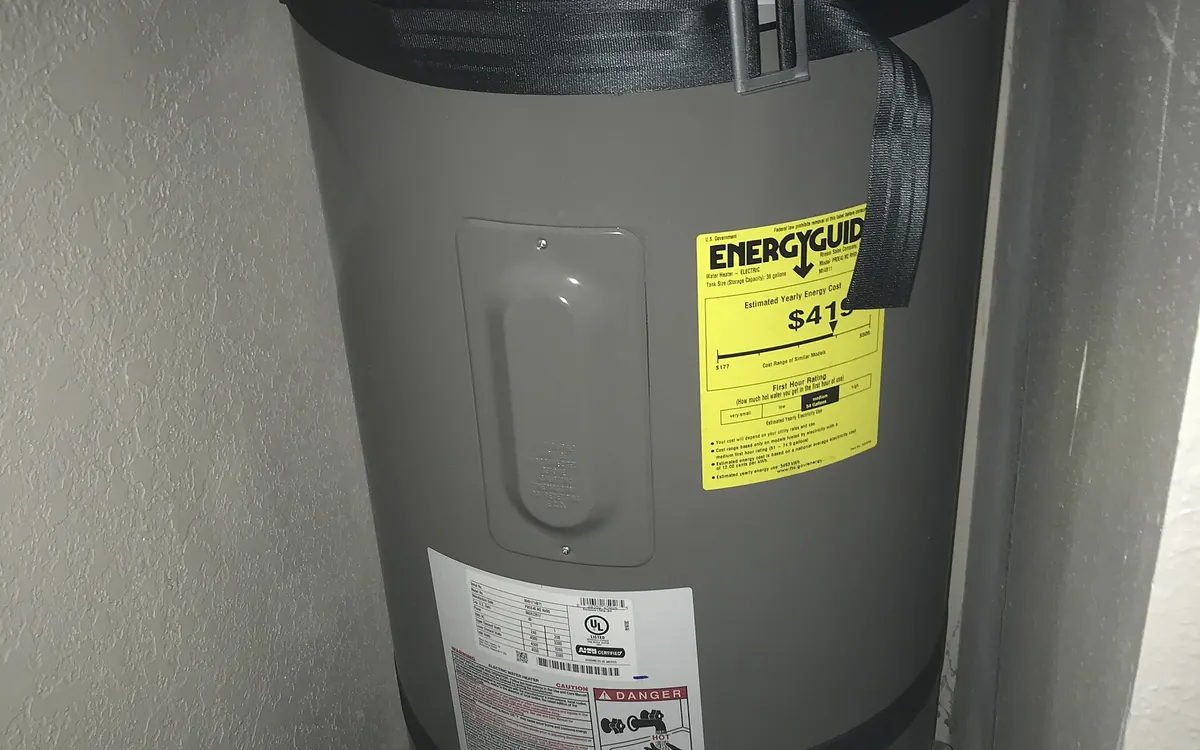
Heatbit, the company behind space heaters with built-in bitcoin miners, has unveiled Bitwater: a screw-in element for electric water heaters that mines bitcoin while it heats the tank. The idea, as Heatbit puts it, is "same heat, same electricity, plus bitcoin", Decrypt reported on Friday, Oct. 23.
What the device is
Every bitcoin miner turns electricity into heat. Bitwater puts that heat to work: instead of a resistance wire, the element carries 20 Bitmain BM1370 chips, and the water around them absorbs their heat while cooling them.
- Hashrate: up to 34 TH/s
- Power: up to 600 W, about 12 joules per terahash
- Cooling: the water itself, so no fans and no noise
- Fit: the standard one-inch element port on 30- to 80-gallon electric tanks sold in the US and Canada, including models from A. O. Smith, Rheem, Bradford White, Whirlpool and GE, according to Heatbit
- App: shows water temperature, hashrate and earnings; you choose solo mining or a mining pool, and payouts go to a bitcoin address you control
Heatbit describes installation as DIY: turn off the breaker, drain the tank, unscrew the old element and thread in Bitwater with the wrench supplied. Anything involving mains power and pressurised hot water is worth checking against local rules, or leaving to an electrician or plumber.
Price and timing
The first production run, which Heatbit calls the Genesis batch, costs $899 to preorder; later batches are planned at up to $1,299. Preorders are refundable and due to ship in the first quarter of 2027. Heatbit says it tested the element through a winter with households of four and five people in New York and Florida, and hinted at a version for gas water heaters.
The trade-offs
A typical US tank element draws about 4,500 W, heating water quickly and then switching off. At 600 W, Bitwater heats far more slowly and is meant to run more than 80% of the time; the tank's existing upper element stays in place as a backup when demand spikes.
The mining income is modest. Decrypt estimates that running at its full 34 TH/s, the element would mine about $1.25 of bitcoin a day, or roughly $455 a year, and that figure moves with the bitcoin price and network difficulty. The pitch only works because the electricity would have been spent on hot water anyway; on a pure mining basis, 600 W around the clock is about 14.4 kWh a day.
The bigger argument
Heatbit frames Bitwater as a way to spread mining across homes, saying households worldwide use about 300 TWh a year heating water, compared with roughly 170 TWh for the whole bitcoin network. That is the company's own comparison. Whether home "heat-reuse" miners can add meaningful hashrate is an open question, but they are a neat illustration of how proof of work turns energy into security. For the basics, see what bitcoin is.
This article is for information only and is not financial advice. Crypto assets are volatile; do your own research. Read our disclaimer
More from Bitcoin
View all →Read next

Bitcoin falls below $80K as US evacuates Middle East staff
Bitcoin slid 2.2% to about $79,700 on Saturday, its weakest in over a month, after reports the US is pulling personnel from Middle East embassies and bases.

USDT vs USDC: which stablecoin should you use?
USDT vs USDC compared: issuers, reserves, audits, regulation in the EU and US, networks, fees and depeg history, plus which dollar stablecoin fits which use.

Apex CEO: Clarity Act failure hands Asia and Gulf a crypto edge
Apex Group's Peter Hughes says the stalled US Clarity Act will push digital-asset business to Asia, the Middle East and Bermuda, and calls EU MiCA restrictive.