Apex CEO: Clarity Act failure hands Asia and Gulf a crypto edge
Apex Group's Peter Hughes says the stalled US Clarity Act will push digital-asset business to Asia, the Middle East and Bermuda, and calls EU MiCA restrictive.
CryptoGroup Newsroom · · 2 min read
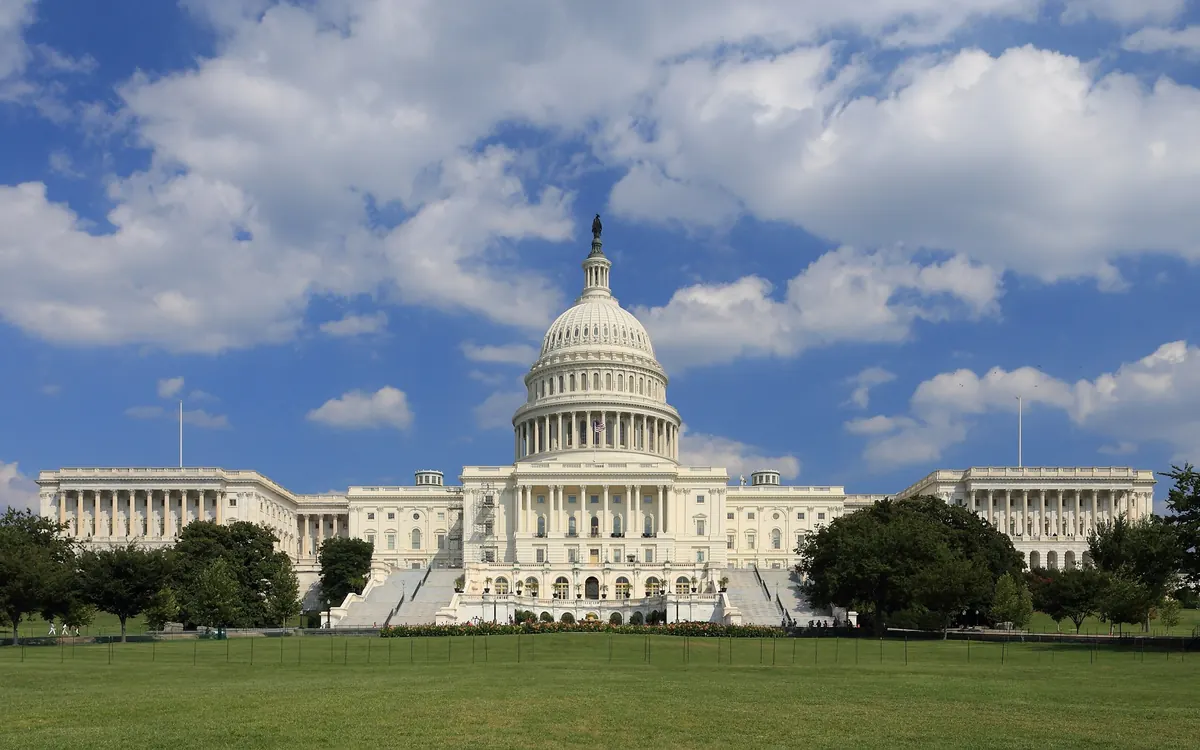
Washington's stalemate does not stop tokenization. It just decides where the paperwork gets filed.
On this page
Peter Hughes, founder and CEO of fund administrator Apex Group, says the U.S. Senate's failure to pass the Clarity Act will push digital-asset business toward Asia, the Middle East and even Bermuda, he told CoinDesk. "I think that the Clarity Act and the delay around that will lead to people finding other solutions elsewhere," he said.
What he said
- The U.S. gap: the Clarity Act, meant to split crypto oversight between the SEC and CFTC, fell short of the 60 Senate votes it needed in September after fights over ethics provisions and stablecoin rewards. The two agencies have since proposed their own rules.
- Europe won't win by default: Hughes called the EU's MiCA regime slow to evolve and restrictive, even though its transition period ended on 1 July.
- Who gains: fast-moving hubs in Asia, the Gulf and Bermuda. Apex, which services more than $3.5 trillion in assets across 50 jurisdictions, recently partnered with droppRWA and Tokeny to tokenize real-world assets, starting in Saudi Arabia.
- The products: he sees tokenized money-market funds as the biggest institutional driver, citing a 5% fund yield against 3% on a bank savings account, plus their use as collateral. Regulated, yield-bearing stablecoins could follow for corporate treasuries in "one, three, or five years".
Our take
Hughes has a point, and a business interest: Apex sells administration in exactly the jurisdictions he praises. Still, the pattern is real. U.S. firms already operate under the GENIUS Act for stablecoins, but without a market-structure law the treatment of most tokens still depends on agency rules that the next administration could rewrite. Regulators are also tightening the screws through supervision instead, with the SEC listing tokenization among its 2027 exam priorities.
His line on banks is worth noting too: he suggested lenders shaped the stablecoin-rewards fight to protect deposits. That debate is not going away, because a tokenized fund paying 5% is a direct competitor to a 3% savings account.
What to watch: whether the Senate returns to the bill after the U.S. midterms, and whether the SEC and CFTC rules land first. Until then, issuers will keep shopping for the jurisdiction that says yes fastest.
This article is for information only and is not financial advice. Crypto assets are volatile; do your own research. Read our disclaimer
More from Regulation
View all →Read next

USDT vs USDC: which stablecoin should you use?
USDT vs USDC compared: issuers, reserves, audits, regulation in the EU and US, networks, fees and depeg history, plus which dollar stablecoin fits which use.
Broadridge's blockchain repo platform handles $359B a day
Broadridge's DLR platform processed an average $359B a day in repo in September. How tokenized repo works, where banks save money and what it cannot fix.

UAE-led sting flags $39B in scam-linked funds and crypto
Operation Confrontation Ghost, led by the UAE with 30 countries, Interpol and Crypto.com, brought 960+ arrests and flagged $39B+ in fraud-linked funds and crypto.