Broadridge's blockchain repo platform handles $359B a day
Broadridge's DLR platform processed an average $359B a day in repo in September. How tokenized repo works, where banks save money and what it cannot fix.
CryptoGroup Newsroom · · 3 min read
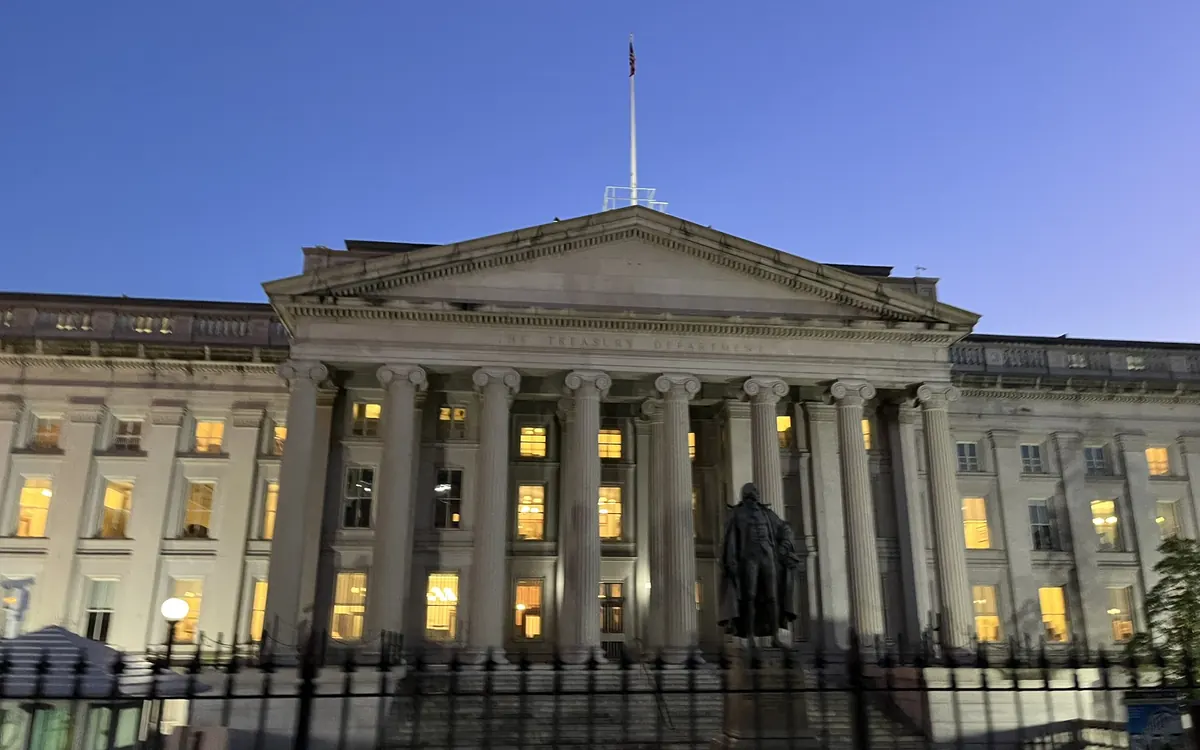
Broadridge, a financial-technology firm far from crypto's spotlight, says its blockchain-based repo platform processed an average of $359 billion a day in September, or $7.5 trillion over the month, CryptoSlate reports. It is one of the largest live uses of a distributed ledger in traditional finance, and it has nothing to do with coins or tokens anyone can trade.
What a repo is
A repurchase agreement (repo) is a secured short-term loan. One institution sells securities, usually U.S. Treasuries, to another for cash and agrees to buy them back later at a slightly higher price; the difference is the interest. Banks, dealers, hedge funds and money-market funds use repo every day, and the U.S. Office of Financial Research estimated that more than $8 trillion of Treasury-backed repo was outstanding in August 2025.
Most repo runs overnight. The problem is timing: a dealer may owe $1 billion at 9 a.m. and expect $1 billion back at 11. Borrowing overnight at a 5% annual rate costs about $138,889 for that day, while two hours at the same rate would be about $11,574 on a simple pro-rata basis, CryptoSlate calculates. Real intraday rates differ, but on huge sums the unused hours add up.
How Broadridge's DLR works
- The underlying bonds stay in existing custody arrangements; digital tokens represent the rights to that collateral.
- Smart contracts swap those rights against confirmation that the cash has arrived, then reverse the trade when the loan is repaid.
- The cash leg uses conventional payment systems, not a stablecoin or new blockchain currency.
- In September Broadridge expanded the platform to securities from G7 markets.
How big it is
| Month (2026) | Average per day | Monthly total |
|---|---|---|
| January | $365B | $7.3T |
| February | $362B | $6.9T |
| May | $362B | $7.2T |
| September | $359B | $7.5T |
These are activity figures, not loans outstanding, and the same bonds can be counted in several deals. CryptoSlate notes that the daily average actually slipped about 1.6% from January to September, even as Broadridge's press releases stressed year-on-year growth. For scale, the New York Fed puts transactions behind the SOFR overnight benchmark at roughly $3 trillion a day.
Where banks save money
In a Broadridge white paper, Société Générale's Michael Walsh said the bank cut spreadsheet work and almost $1 million a year in operating costs, and that daylight-overdraft charges fell to zero on four days out of five. Broadridge and consultancy Finadium modelled that if 15% of a bank's intraday funding ran through DLR, its required liquidity buffer could shrink by 8% to 17%.
What it cannot fix
Faster settlement does not create cash. If a lender raises the haircut on $1 billion of bonds from 2% to 5%, the borrower receives $950 million instead of $980 million, whatever the technology. If lenders refuse to roll loans, the borrower still has to find dollars or sell assets. Separately, the SEC's central-clearing mandate for Treasuries kicks in on 31 December 2026 for cash trades and 30 June 2027 for repo, which is a different change from tokenized settlement.
Why crypto readers should care
Tokenizing existing assets is where most institutional blockchain money is going, from tokenized stocks to DTCC's new tokenization service. Repo also touches crypto directly: stablecoin issuers hold large amounts of Treasuries, and funding stress in bond markets can spill into leveraged crypto trades.
This article is for information only and is not financial advice. Crypto assets are volatile; do your own research. Read our disclaimer
More from Markets
View all →Read next

USDT vs USDC: which stablecoin should you use?
USDT vs USDC compared: issuers, reserves, audits, regulation in the EU and US, networks, fees and depeg history, plus which dollar stablecoin fits which use.

Apex CEO: Clarity Act failure hands Asia and Gulf a crypto edge
Apex Group's Peter Hughes says the stalled US Clarity Act will push digital-asset business to Asia, the Middle East and Bermuda, and calls EU MiCA restrictive.

UAE-led sting flags $39B in scam-linked funds and crypto
Operation Confrontation Ghost, led by the UAE with 30 countries, Interpol and Crypto.com, brought 960+ arrests and flagged $39B+ in fraud-linked funds and crypto.