How do interest rates affect bitcoin and crypto prices?
Why Fed rate hikes and cuts move bitcoin: opportunity cost, liquidity, the dollar, leverage and stablecoin yields, with 2020–2026 examples and what to watch.
CryptoGroup Newsroom · · 6 min read
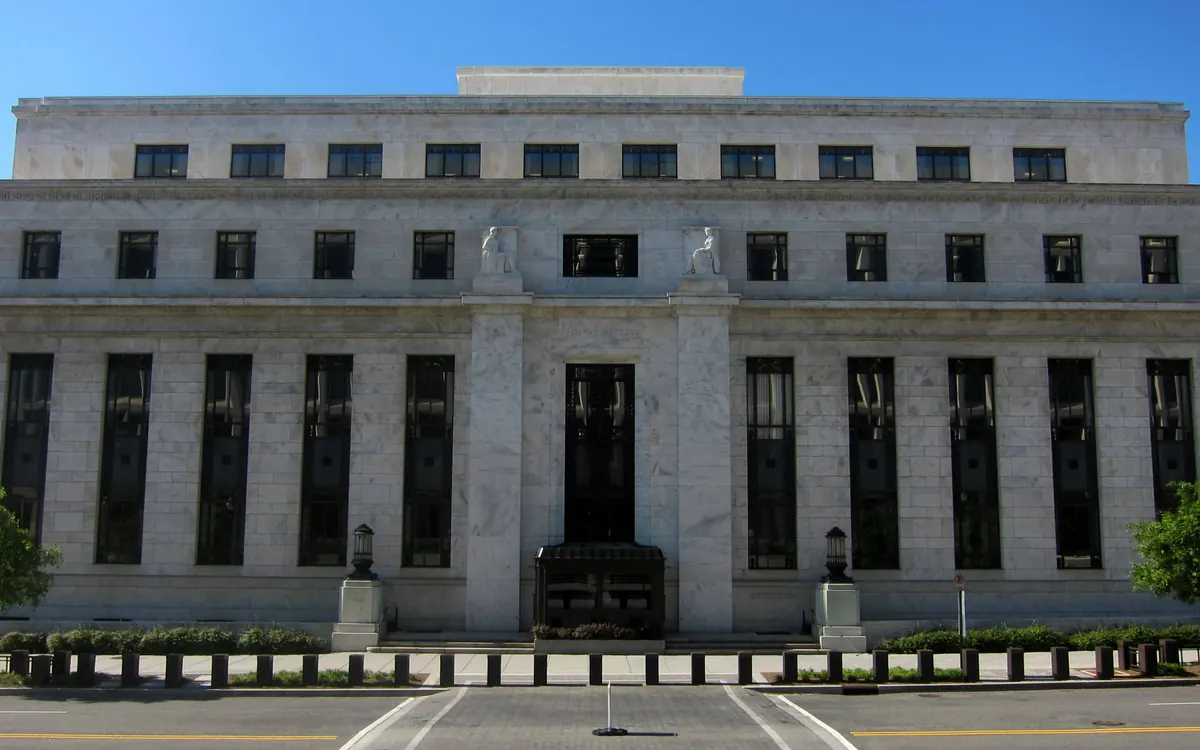
Interest rates affect bitcoin mainly by changing what investors can earn elsewhere and how much cheap money is sloshing around markets. When the US Federal Reserve raises rates, cash and government bonds pay more, borrowing gets dearer and risky assets tend to struggle; when it cuts, the opposite pressure usually applies. This explainer covers the five channels that connect rates to crypto, real examples from 2020 to 2026, and the data worth watching. It is educational, not investment advice.
Who sets "the rate"?
When traders talk about rates, they usually mean the federal funds rate, the overnight rate US banks charge each other. The Fed's Federal Open Market Committee (FOMC) sets a target range for it at eight scheduled meetings a year. It feeds into everything from credit cards to mortgages and, through Treasury yields, into how investors value almost every asset.
As of Oct. 28, 2026 the range is 3.75%–4%: the Fed raised it in September, its first hike since 2023, and held it in October in a 10–2 vote, with two officials wanting another increase.
Two other rates matter for crypto:
- Treasury yields, especially the 10-year, which reflect where markets think rates and inflation are heading.
- Real yields, Treasury yields minus expected inflation. They measure the true reward for holding safe assets.
Five ways rates reach bitcoin
1. Opportunity cost
Bitcoin pays no interest or dividend. If a short-term Treasury bill pays close to 4% with almost no risk, holding BTC means giving that up. The higher safe yields go, the stronger the case an investor needs for owning a volatile, non-yielding asset. In October 2026 the 10-year yield touched 5.31% on Oct. 5, a level at which, as Decrypt put it, a nearly risk-free return is available "without owning anything volatile".
2. Liquidity and risk appetite
Low rates and central-bank bond buying push money out of cash and into riskier assets, from tech stocks to crypto. Tightening drains that liquidity. This is why bitcoin has often traded in step with the Nasdaq around big macro events.
3. The US dollar
Higher US rates tend to strengthen the dollar. Bitcoin is priced in dollars, and a strong dollar tightens financial conditions worldwide, which usually weighs on assets priced in it.
4. The cost of leverage
A lot of crypto trading uses borrowed money, from margin loans to perpetual futures. When base rates rise, borrowing costs and funding rates tend to follow, and leveraged positions become more fragile. Sharp moves on Fed days can trigger chains of forced closures; see what liquidation is. After Fed Chair Kevin Warsh's Jackson Hole speech in August 2026, about $481 million of crypto positions were liquidated within 24 hours, Decrypt reported.
5. Stablecoin yields
Issuers of dollar stablecoins hold reserves mostly in cash and short-term Treasuries and keep the interest. Higher rates make that business more profitable, which helps companies such as Coinbase that share in USDC reserve income, and make on-chain dollar yields more competitive with risky tokens. Lower rates shrink that income.
What actually happened: 2020–2026
Rates and bitcoin, key moments
Mar 2020
Emergency cuts to near zero
The Fed cut its target range to 0%–0.25% and restarted bond buying. Bitcoin went on to set a record high near $69,000 in November 2021.
Mar 2022
Hiking cycle begins
The Fed began raising rates from near zero. Bitcoin fell below $16,000 by November 2022, a slide deepened by crypto failures such as FTX.
Jul 2023
Peak at 5.25%–5.50%
Rates reached their highest level in more than two decades and stayed there for over a year.
Sep 2026
First hike since 2023
With inflation running above target, the Fed raised rates again, to 3.75%–4%.
Oct 2026
Hold, with two hawkish dissents
Bitcoin barely moved after the decision, trading near $81,000, as traders focused on a possible December hike.
The pattern is real but loose. In 2022 rising rates hit crypto hard, but the collapse of Terra and FTX did at least as much damage. Bitcoin's 2024 rally to new highs was driven largely by US spot ETFs, not rate cuts alone.
Expectations matter more than the decision
Markets price in the next move well before it happens. Tools such as CME FedWatch turn futures prices into probabilities: before the October 2026 meeting they put the odds of no change at around 90%, so the hold itself was not news. What moves prices is a surprise: an unexpected decision, a change of wording in the statement, new projections (published in March, June, September and December) or the chair's press conference.
The same logic applies to data that shapes the Fed's next step. When US inflation came in hotter than expected on Oct. 14, 2026, bitcoin dropped about $1,000 within minutes as traders raised their bets on further hikes.
| Scenario | Typical pressure on BTC | Why |
|---|---|---|
| Surprise hike or hawkish tone | Downward | Higher yields, stronger dollar, costlier leverage |
| Expected decision, no new signal | Little change | Already priced in |
| Surprise cut or dovish tone | Upward | Lower yields, more liquidity |
| Cut because of a crisis | Mixed | Easier money but falling risk appetite |
What to watch
- FOMC meeting dates and the 18:00 UTC statement (19:00 UTC in winter) plus the press conference 30 minutes later.
- Inflation (CPI, PCE) and jobs data, which shape the next decision.
- The 10-year Treasury yield and the dollar index, for how markets read the Fed.
- Funding rates and open interest on crypto derivatives, for how much leverage could be flushed out.
If you hold bitcoin for the long term, these events mostly add short-term noise. If you trade with leverage, they are the days when risk is highest. For a simpler way to hold BTC, compare a bitcoin ETF with buying bitcoin directly.
Frequently asked questions
Do rate hikes always make bitcoin fall?
No. Hikes tend to weigh on bitcoin when they are bigger or earlier than expected. A widely expected hike may already be in the price, and other news such as ETF flows or regulation can outweigh it.
Why does bitcoin react to Fed rate decisions?
Because rates change the return on cash and bonds, the amount of liquidity in markets, the strength of the dollar and the cost of borrowing for leveraged traders. All four affect demand for risky assets like crypto.
Are lower interest rates good for crypto?
Lower rates usually help risk assets by making cash less attractive and borrowing cheaper. But if rates are cut because the economy is in trouble, falling risk appetite can push crypto down anyway.
What is the current Fed rate?
As of Oct. 28, 2026 the federal funds target range is 3.75% to 4%. The next scheduled meeting is on Dec. 8–9, 2026.
This article is for information only and is not financial advice. Crypto assets are volatile; do your own research. Read our disclaimer
More from Bitcoin
View all →Market update
Bitcoin ETFs add $176M as ether funds keep bleeding
Read next

Fed holds rates at 3.75%–4%; bitcoin steady near $81,000
The Fed kept rates at 3.75%–4% in a 10–2 vote, with Cook and Hammack backing a hike. Bitcoin held near $81,000 as traders eyed a possible December increase.
Coinbase Q3 earnings: what to watch after Robinhood's crypto slump
Coinbase reports Q3 results on Thursday after Robinhood's crypto revenue fell 55%. Analyst forecasts for volume, revenue, stablecoin income and derivatives.

CFTC's Selig: who is liable if an AI trading agent goes rogue?
At a CFTC forum, chairman Mike Selig called AI a road to autonomous trading and asked whether agent developers must register and if 'know your agent' rules are needed.