Luxor raises $16M to turn AI computing power into a market
Bitcoin mining services firm Luxor raised $16M in a CMT Digital-led round with Canaan and MicroBT to grow AI hardware brokerage and compute-price contracts.
CryptoGroup Newsroom · · 3 min read
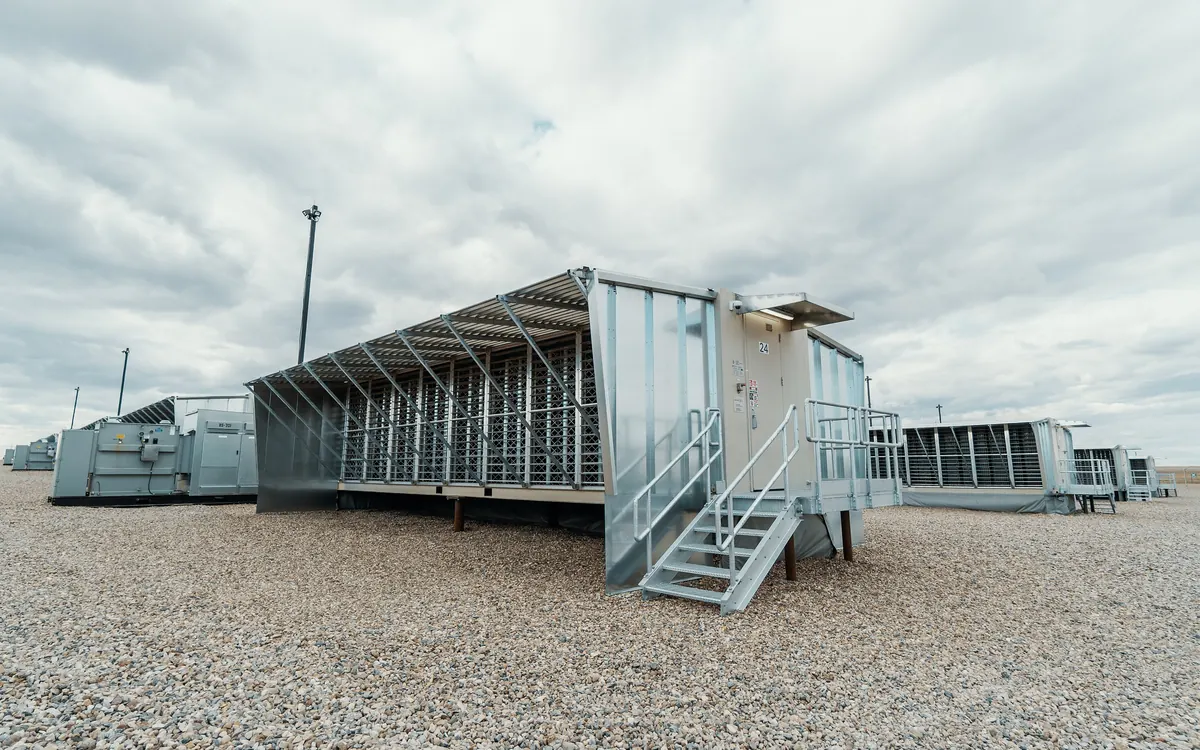
Luxor Technology, a Seattle company best known for selling software and services to bitcoin miners, has raised $16 million to push further into artificial intelligence, including contracts that let buyers and sellers fix the price of computing power in advance. The round was led by CMT Digital, the venture arm of Chicago trading firm CMT Group, CoinDesk reports.
The deal
- Investors: CMT Digital led; bitcoin mining hardware makers Canaan and MicroBT joined, along with Halo, Steelhead and angel investors, according to Decrypt.
- Structure: the round mixed new money with sales of existing shares. Luxor did not say how much of the $16 million went into the company itself.
- Use of funds: scaling its AI cloud platform, working capital for its AI hardware business, growing its compute-derivatives trading and new engineering and sales hires.
Luxor launched a separate AI unit in September. Its hardware desk has traded about $1 billion of mining machines, its energy arm handles more than 75 megawatts of load in two US grid regions, and its cloud platform had processed 1.8 million workloads this year as of September, Decrypt reported.
Pricing compute like a commodity
The most unusual part of the plan is trading. Bitcoin miners have long used hashrate and power contracts to smooth out swings in revenue. Luxor wants to offer the same tools for AI: its over-the-counter desk already writes cash-settled options, forwards and backstops tied to indexes of GPU rental prices, and in August it launched an index tracking daily asking prices for Nvidia AI servers.
CMT Digital partner Sam Hallene told CoinDesk the market's final shape is still unclear. Luxor COO Ethan Vera said price transparency, particularly for AI hardware, is still the main problem.
Luxor is not alone. On the same day BitMEX co-founder Arthur Hayes set out plans for his Flop Network to derive a benchmark "spot compute" price from AI-agent payments, Cointelegraph reported.
Why bitcoin miners care
Mining sites already have what data centres need most: grid connections and land. Luxor says its software serves miners with nearly two gigawatts of capacity. After assessing more than half of it, it found that most sites had enough power and fibre for AI work but would need new data-centre buildings. CoinShares counts more than $70 billion of AI and HPC contracts signed by listed miners by the end of March.
Not everyone is leaving hashrate behind: Nasdaq-listed NIP Group said last week it plans to expand its mining capacity by about 48%. For background on how mining revenue works, see our explainers on mining pools and proof of work vs proof of stake, and our earlier report on Vitalik Buterin's comparison of mining and AI inference costs.
Frequently asked questions
What does Luxor do?
Luxor provides a mining pool, software, hardware brokerage, energy services and hashrate trading for bitcoin miners, and since September 2026 a separate AI computing business.
What is a compute derivative?
A contract whose value depends on the price of renting computing power, such as GPU hours. Buyers and sellers use it to lock in future costs or revenue, like miners do with hashrate contracts.
Is Luxor leaving bitcoin mining?
No. The raise expands its AI business alongside its existing bitcoin mining services.
This article is for information only and is not financial advice. Crypto assets are volatile; do your own research. Read our disclaimer
More from Bitcoin
View all →Read next

Ark buys $5.2M of Circle as Mizuho flags AI-agent risk to USDC
Ark Invest bought 65,615 Circle shares and sold $15.9M of its ARKB bitcoin ETF as BTC stayed under $80,000, while Mizuho cut its Circle target to $43.

How to buy Ethereum (ETH) safely: a step-by-step guide
How to buy Ethereum safely: choosing a licensed exchange, verification, paying by bank or card, picking the right network, fees, withdrawing ETH and avoiding scams.
Firedancer now charges 1 SOL per bug report to stop AI spam
Jump's Solana client Firedancer now makes researchers burn 1 SOL (~$100) per bug report after a contest drew 809 mostly AI-assisted reports, 127 real findings.