How to buy Ethereum (ETH) safely: a step-by-step guide
How to buy Ethereum safely: choosing a licensed exchange, verification, paying by bank or card, picking the right network, fees, withdrawing ETH and avoiding scams.
CryptoGroup Newsroom · · 7 min read
On this page
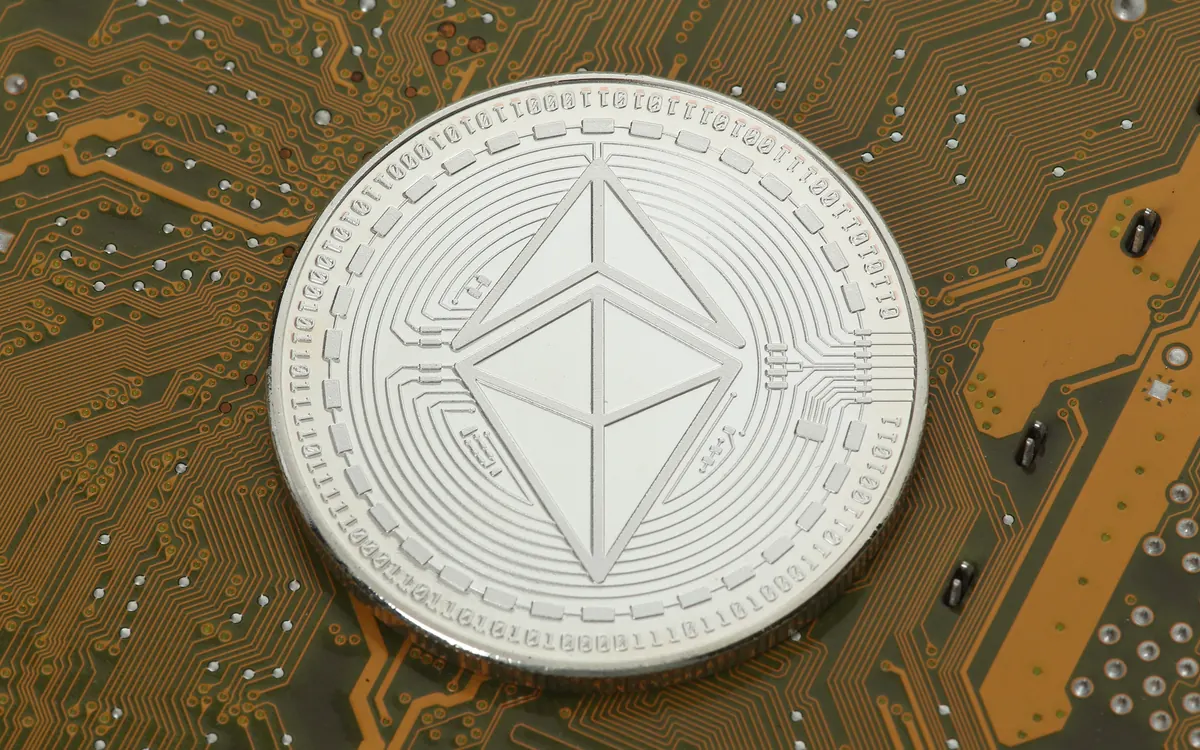
Buying ether (ETH), the currency of the Ethereum network, works much like buying bitcoin: open an account on a licensed platform, pay in your local currency and decide where to keep the coins. The differences come after the purchase. Ethereum has many networks, tokens that need ETH for fees and staking options, and most expensive beginner mistakes happen there. This guide walks through each step. If you are not sure what Ethereum is yet, read what is Ethereum first.
Decide how you want to own ETH
There are three ways to get exposure, and they are not the same thing:
| Exchange or app | Your own wallet | Ether ETF | |
|---|---|---|---|
| What you own | A claim on ETH held by the platform | ETH controlled by your keys | Fund shares in a brokerage account |
| Can you send it on-chain? | Usually, after withdrawal | Yes | No |
| Main risk | Platform failure or freeze | Losing your seed phrase, scams | Fund fees, market hours only |
| Good for | First purchase, small amounts | Long-term holding, DeFi | Retirement or tax-wrapped accounts |
Most people buy on an exchange, then move savings to their own wallet. Spot ether ETFs have traded in the US since July 2024; the trade-offs are similar to those we cover in bitcoin ETF vs buying bitcoin.
Choose a licensed exchange
Pick a large, regulated exchange or broker that is authorised in your country. In the EU, check the MiCA register; elsewhere, look for your financial regulator's public list. Compare:
- Total cost: trading fee plus the spread (the gap between buy and sell price). "Zero-fee" apps often charge through a wider spread.
- Withdrawals: can you send ETH to your own wallet, and on which networks?
- Payment methods: bank transfer, card or local options.
- Track record: proof of reserves, security history, customer support.
Avoid platforms you found through social-media ads, Telegram groups or an "account manager" who contacted you first. Our CEX vs DEX guide explains when a decentralized exchange makes sense; for a first purchase with local money, a centralized exchange is usually simpler.
Open and secure your account
Expect to verify your identity (KYC) with an ID document and a selfie. Before depositing anything:
- Turn on two-factor authentication with an authenticator app or security key, not SMS.
- Set a strong, unique password and an anti-phishing code if the exchange offers one.
- Enable a withdrawal address allowlist, so funds can only go to addresses you have approved.
Fund the account and place your order
A bank transfer is usually the cheapest way to deposit; cards are instant but cost more. Then buy ETH:
- A market order buys immediately at the current price.
- A limit order waits until ETH reaches a price you set.
- You do not need a whole coin. ETH divides into 10^18 units called wei; fees are quoted in gwei (one billionth of an ETH).
You can buy everything at once or split the amount into regular purchases (dollar-cost averaging). The pros and cons are the same as in our how to buy bitcoin guide. Check minimum fees before setting up small recurring buys.
Pick the right network before you withdraw
This is the step where ETH differs most from bitcoin. Your Ethereum address (starting with 0x) also works on layer-2 networks such as Arbitrum, Base and Optimism, and many exchanges let you withdraw ETH to any of them. The same address, but separate balances.
- Ethereum mainnet: most secure and widely supported; network fees are higher.
- Layer 2s: much cheaper transfers, ideal for small amounts and apps, but your wallet must be set to the same network. Read what is a layer 2 for how they work.
Send a small test transaction first, confirm it arrives, then send the rest. If ETH "disappears", it is almost always sitting on a different network in the same wallet.
Move savings to a wallet you control
Coins on an exchange are an IOU from that company. For anything you plan to hold, use a self-custody wallet: a software wallet for small amounts and DeFi, a hardware wallet for savings. Write down the seed phrase on paper or metal, never in a photo or cloud note, and never type it into a website. Our guides to storing Ethereum safely and what a seed phrase is cover the details, including token approvals and address poisoning.
Keep a little ETH on every network you use: you need it to pay gas fees, even to move stablecoins.
Consider whether to stake
ETH can earn a staking reward because the network runs on proof of stake. You can stake through an exchange, a liquid staking token or your own validator (32 ETH). Each adds risk: lock-ups, smart-contract bugs, the platform's solvency and possible penalties. Rewards are not guaranteed and are paid in ETH, so they do not protect you from price falls. See what is crypto staking before you start.
Keep records for taxes
In most countries, selling, swapping or spending ETH is a taxable event, and staking rewards may count as income. Export your exchange history regularly and note the date, amount and price of each purchase. Records are much harder to rebuild later.
Avoid the common ETH scams
- Fake wallet apps and support accounts: download wallets only from official sites; real support never asks for your seed phrase.
- "Doubling" giveaways and fake airdrops that ask you to connect a wallet and sign.
- Approval and permit phishing: a signature that looks harmless can let a contract drain your tokens.
- Investment "managers" on messengers or dating apps who steer you to a platform they choose.
Our crypto scam checklist goes through the warning signs.
Frequently asked questions
What is the safest way to buy Ethereum?
Buy on a large exchange that is licensed in your country, secure the account with app-based two-factor authentication, then withdraw long-term holdings to a wallet you control, ideally a hardware wallet.
Can I buy less than one ETH?
Yes. ETH is divisible to 18 decimal places, and most exchanges let you buy for a few dollars or euros.
Which network should I withdraw ETH to?
Use Ethereum mainnet for long-term storage if fees are acceptable, or a layer 2 such as Arbitrum or Base for small amounts. Your wallet must be set to the same network, and a small test transfer first is wise.
Is buying an ether ETF the same as buying ETH?
No. An ETF gives you fund shares in a brokerage account. You cannot send them on-chain or use them in apps, and the fund charges an annual fee.
Do I need ETH to send USDC or other tokens on Ethereum?
Yes. Every transaction on Ethereum and most layer 2s pays gas in ETH, so keep a small balance on each network you use.
This article is for information only and is not financial advice. Crypto assets are volatile; do your own research. Read our disclaimer
More from Ethereum
View all →Read next

Ark buys $5.2M of Circle as Mizuho flags AI-agent risk to USDC
Ark Invest bought 65,615 Circle shares and sold $15.9M of its ARKB bitcoin ETF as BTC stayed under $80,000, while Mizuho cut its Circle target to $43.
Firedancer now charges 1 SOL per bug report to stop AI spam
Jump's Solana client Firedancer now makes researchers burn 1 SOL (~$100) per bug report after a contest drew 809 mostly AI-assisted reports, 127 real findings.

How to send money abroad with stablecoins: step by step
How to send money abroad with stablecoins: compare costs with banks and transfer apps, pick the right coin and network, send safely and cash out in local currency.