What is proof of reserves? How exchanges prove they hold funds
What proof of reserves means, how exchanges use Merkle trees and wallet signatures to show they hold customer crypto, how to check your balance and its limits.
CryptoGroup Newsroom · · 7 min read
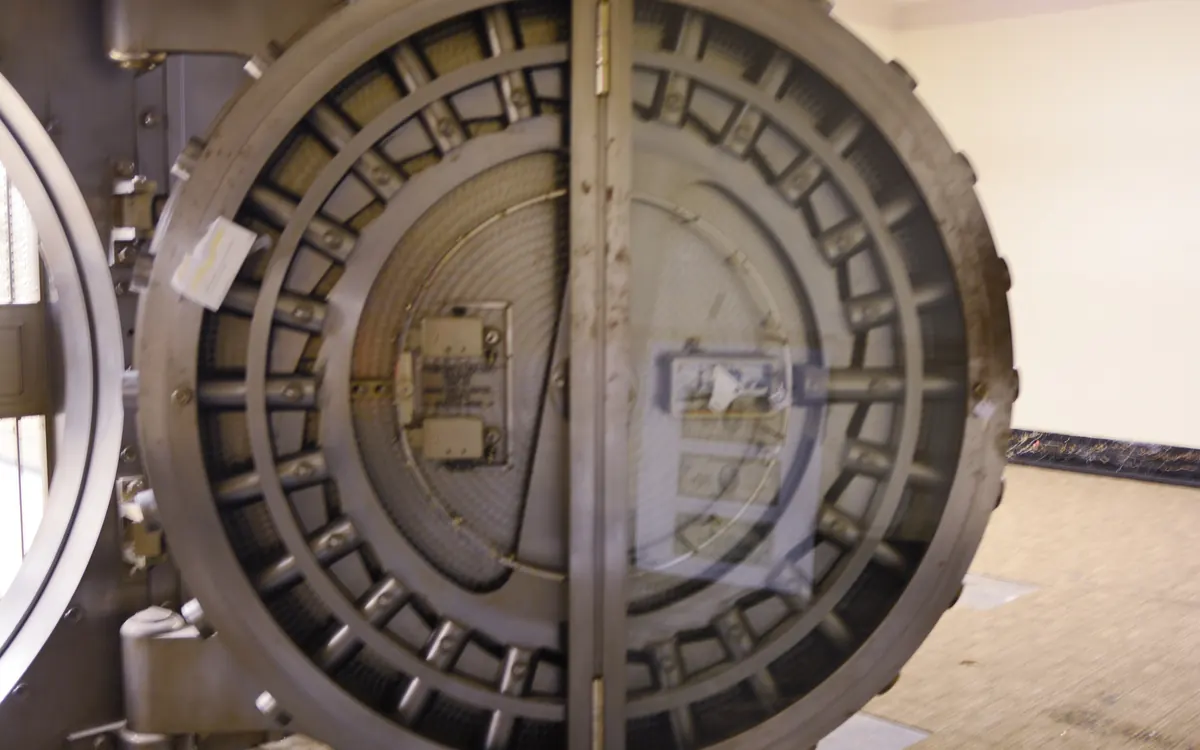
Proof of reserves (PoR) is a way for a crypto exchange, custodian or token issuer to show that it actually holds the assets it owes its customers. Instead of asking users to trust a balance on a screen, the platform publishes evidence that its on-chain wallets contain at least as much bitcoin, ether or stablecoins as the total of customer balances — at a specific point in time.
The idea goes back to the early days of bitcoin exchanges, but it went mainstream after the collapse of FTX in November 2022, when customers discovered that deposits they thought were safe had been used elsewhere. Since then, proof-of-reserves pages have become a standard feature on many large exchanges.
How proof of reserves works
A proof of reserves has two halves. Both are needed; either one alone proves very little.
1. Proof of assets
The platform shows which blockchain addresses it controls and how much they hold. Because blockchains are public, anyone can look up the balances. To prove the addresses really belong to the exchange — rather than to someone else — the firm signs a message with the private keys, or moves a small amount on request, often in front of an independent accountant.
2. Proof of liabilities
This is the harder part: showing how much the platform owes customers without publishing everyone's private account data. Most exchanges use a Merkle tree, a structure that hashes each customer balance into a "leaf", then hashes the leaves together in pairs until a single Merkle root remains. Change any balance, however slightly, and the root changes. The approach was discussed by bitcoin developers Greg Maxwell and Peter Todd as early as 2013.
The exchange publishes the root and the total liabilities. Each customer can then check that their own balance is one of the leaves. If enough users check, it becomes hard to quietly leave accounts out.
3. The comparison
Finally, assets are compared with liabilities, usually per coin. A reserve ratio of 100% or more means the platform held at least one coin on-chain for every coin it owed customers at the snapshot time.
Ways platforms do it
| Merkle tree only | Accountant-reviewed | Zero-knowledge proof | |
|---|---|---|---|
| Who checks | Users themselves | An independent accounting firm | Anyone running the verifier |
| Hides customer data | Partly | Yes | Yes |
| Catches fake negative balances | No | Depends on the review | Yes, if the circuit checks for it |
| Main weakness | Relies on users checking | Only as good as the reviewer | Complex; still a snapshot |
A known flaw of a plain Merkle tree is that a dishonest exchange could add a fake account with a negative balance to make total liabilities look smaller. Binance, which launched its Merkle-tree system in November 2022, later added zk-SNARKs — zero-knowledge proofs — to show that every leaf was counted and no account had a negative net balance. Kraken uses an independent accountant who takes an anonymised snapshot of balances, collects signatures proving control of wallets and compares the two.
Token issuers use related tools. Stablecoin issuers publish regular reserve reports from accounting firms (see what a stablecoin is), and oracle networks such as Chainlink Proof of Reserve publish custody balances on-chain so smart contracts can read them — the mechanism behind Chainlink's new CustodySync lending system.
How to check your own balance
- Log in to your exchange account and look for a Proof of Reserves or Transparency page.
- Find your record ID or leaf hash for the latest snapshot; it is generated from your balances at that time.
- Use the exchange's verification tool, or better, its open-source verifier, to confirm your leaf is part of the published Merkle root.
- Compare the snapshot date with today. A report that is several months old says little about the present.
- Check that the coins you actually hold are covered — some reports include only a handful of assets.
What proof of reserves does not prove
Proof of reserves is useful, but it is not an audit and it does not prove an exchange is solvent. Kraken itself lists several limits on its own reports, and accounting firms have raised similar points:
- It is a snapshot. Funds could be borrowed just for the check and returned the next day, or lost after it.
- It ignores other debts. Loans, lawsuits or operating losses are not part of the customer-balance tree. An exchange can hold 100% of customer bitcoin and still owe more than it owns overall.
- Control is not exclusive ownership. Signing with a key proves access, not that nobody else has a copy of the key or a claim on the coins.
- Coverage varies. Some reports cover only major coins, or leave out staked and lent assets.
- No common standard. There is no single professional standard for PoR work. In December 2022 the accounting firm Mazars paused its proof-of-reserves work for crypto clients, a reminder that a report is only as strong as the people behind it.
That is why Ethereum co-founder Vitalik Buterin argued in a November 2022 essay that the goal should be proof of solvency — showing assets exceed all liabilities — and, longer term, designs where users do not have to trust the platform with custody at all.
Proof of reserves vs self-custody
The cleanest way to avoid exchange risk is not to need proof at all: keep long-term holdings in a wallet where you hold the keys. Our guides on custodial vs non-custodial wallets and how to store crypto safely explain the trade-offs, and centralized vs decentralized exchanges shows where each model fits.
Frequently asked questions
What is proof of reserves in crypto?
It is evidence published by an exchange or custodian that its blockchain wallets hold at least as much crypto as it owes customers at a given time, usually combining wallet signatures with a Merkle tree of customer balances.
Does proof of reserves mean an exchange is safe?
No. It shows customer assets were covered at the snapshot, but not other debts, borrowed funds, what happened afterwards or whether anyone else controls the keys.
What is a Merkle tree in proof of reserves?
A data structure that turns every customer balance into a hash and combines the hashes into one root. Users can check their balance is included without seeing anyone else's.
What is the difference between proof of reserves and an audit?
Proof of reserves checks customer assets against customer balances at one moment. A full financial audit looks at the whole company, including all liabilities and internal controls, over a period of time.
How often should an exchange publish proof of reserves?
There is no fixed rule. Some exchanges publish monthly or more often, others quarterly. The more frequent and verifiable the reports, the more useful they are.
This article is for information only and is not financial advice. Crypto assets are volatile; do your own research. Read our disclaimer
More from Exchanges
View all →Read next

Kalshi to settle index contracts on S&P Dow Jones values
S&P Dow Jones Indices names Kalshi a preferred prediction market for contracts on its benchmarks and plans indices built from Kalshi's event data.

Chainlink CustodySync lets Anchorage clients borrow in DeFi
Chainlink's CustodySync launches with Anchorage Digital: institutions borrow from DeFi lending markets while their collateral stays in qualified custody.

How to check if a hardware wallet is genuine: 7 steps
How to tell a real hardware wallet from a fake or tampered one: where to buy, packaging, seed phrase red flags, the authenticity check, firmware and a test send.