Google Willow cuts quantum errors 40x — why bitcoin cares
Google says its Willow chip prepared quantum 'magic states' with about 40 times fewer errors — a hardware step that matters most for bitcoin's oldest coins.
CryptoGroup Newsroom · · 3 min read
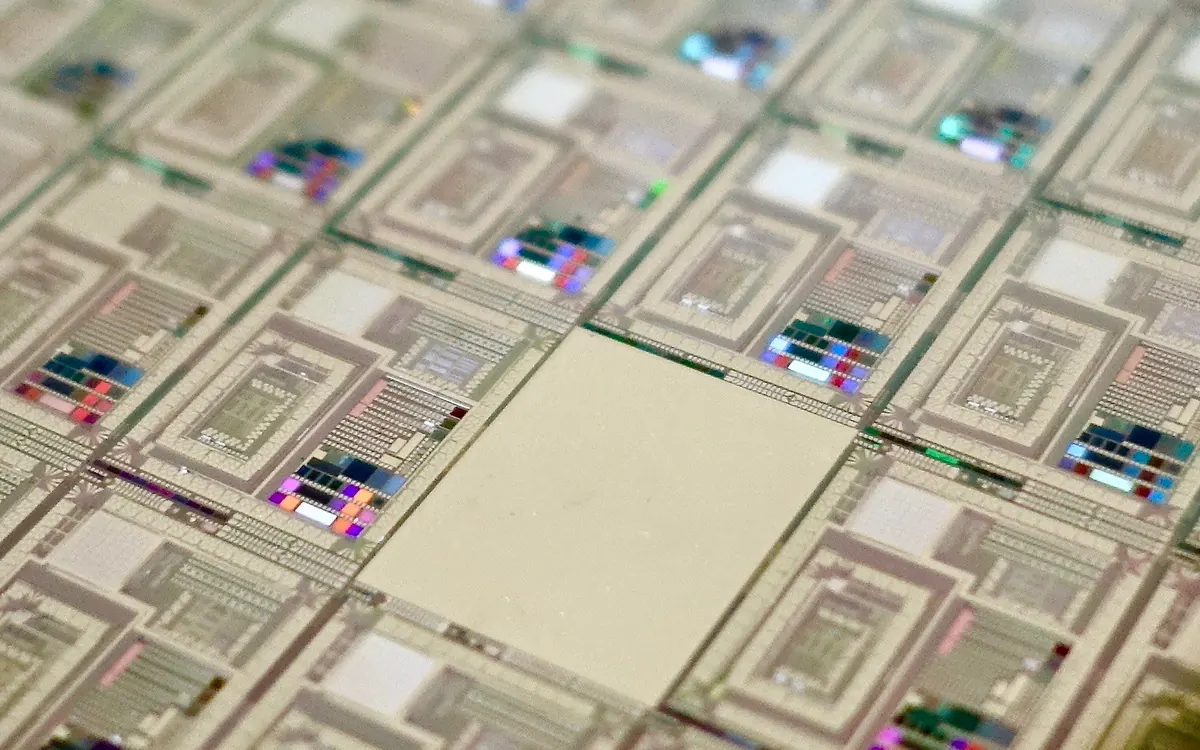
Google says its Willow quantum processor has prepared so-called "magic states" with roughly 40 times fewer errors than before, according to research published in the journal Science this week. The result tackles a part of quantum computing that rarely features in bitcoin debates — the costly preparation work a machine has to do before and during a calculation — and it lands as the industry argues over how to protect the network's oldest coins.
What Google actually showed
Quantum computers store information in fragile qubits that pick up errors from heat, vibration and stray signals. Engineers group many physical qubits into error-corrected "logical" qubits, and those logical qubits need a steady supply of specially prepared states to run certain operations. Each magic state is used up once, so a machine has to keep producing them for the whole job.
Google's method, called cultivation, starts with a rough version of the state, checks it and throws away flawed attempts. According to CoinDesk's summary of the paper:
- The states that survived reached about 99.99% fidelity.
- Only about 8% of attempts made it through the checks — roughly eight in every 100.
- The team says the method still has to be scaled up and fed into longer, real-time calculations.
Why bitcoin's oldest coins are in focus
A large enough quantum computer running Shor's algorithm could, in theory, work backwards from a public key to the private key that controls the coins. Many early bitcoin outputs expose the public key from the start, and any address that has already spent reveals it too. Newer address formats hide the key behind a hash until the owner spends.
That is why lost coins are the hardest case: the network can add quantum-resistant spending rules, but only someone holding the old keys can move funds into them. In March Google estimated that a future machine with fewer than 500,000 physical qubits could break the signature scheme used by Bitcoin and Ethereum under specific assumptions, and that one modelled attack would consume about 500,000 reliable magic states per second.
Context
The paper follows the launch of the Quantum Alliance, whose members estimate that around 6.4 million BTC sit in addresses with exposed public keys, and Coinbase's call to start bitcoin's quantum migration now. Old coins have also been moving: CoinDesk notes 100.02 BTC untouched since July 2010 changed hands on October 7, though such transfers do not prove holders are reacting to quantum fears. For everyday users, the practical advice is unchanged — avoid reusing addresses and follow the basics in our guide to storing crypto safely.
This article is for information only and is not financial advice. Crypto assets are volatile; do your own research. Read our disclaimer
More from Security
View all →Read next

Goldman, Wells Fargo, Morgan Stanley bet on tokenization
Q3 earnings calls showed how Goldman Sachs, Wells Fargo and Morgan Stanley each expect to profit from tokenization: more trading, faster payments, more advice.

Ether margin longs on Bitfinex climb as prices stall
Bitfinex traders hold about 367,500 ETH in margin longs against under 9,000 ETH in shorts, while bitcoin and ether trade flat into a quiet Saturday evening.

Fidelity's Solana health check: reliable, but too concentrated
Fidelity's FCAT says Solana has gone two years without a major outage, yet 18 validators, one host and two EU cities hold an outsized share of its stake.