AI cracks a 25-year NSA curve mystery: what it means for bitcoin
Anthropic says Claude traced the NSA-supplied seeds of five NIST curves to a 1990s random-number generator. No break, and bitcoin's curve isn't involved.
CryptoGroup Newsroom · · 4 min read
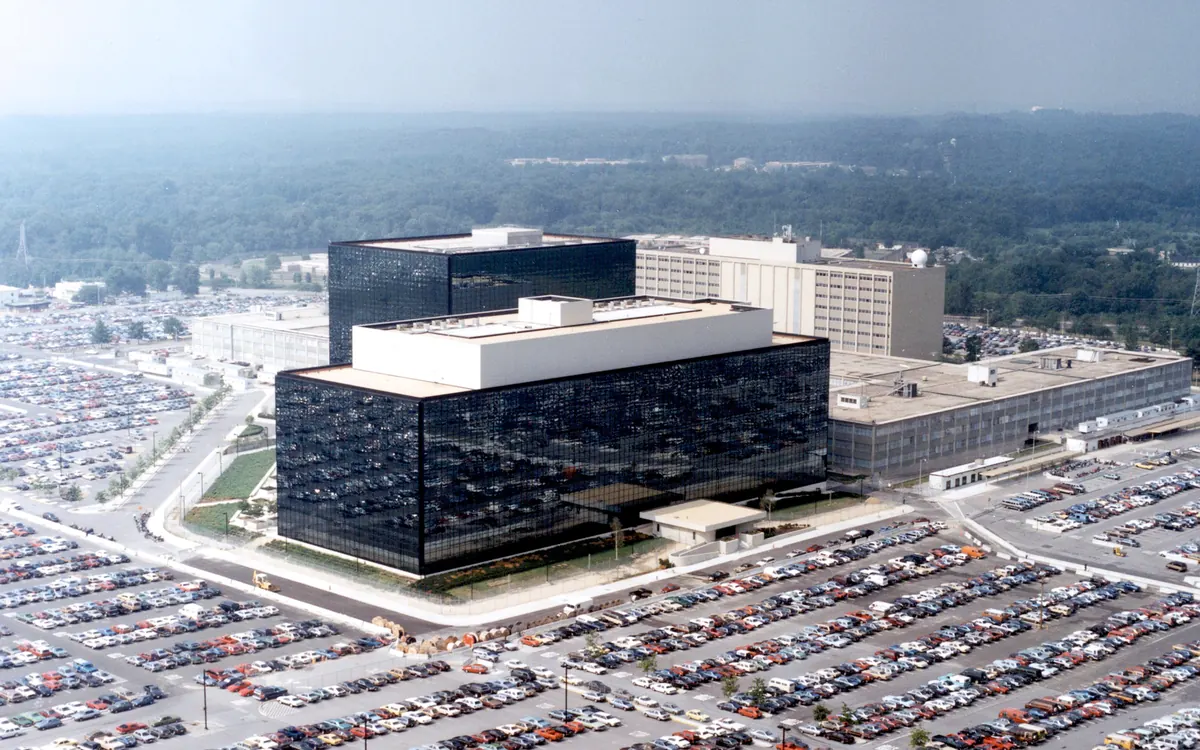
An Anthropic AI model has worked out where the National Security Agency's unexplained "seeds" for the NIST elliptic curves came from — a puzzle cryptographers had been chasing for about 25 years. According to Anthropic's write-up published on 16 October, the numbers behind the P-192, P-224, P-256, P-384 and P-521 curves were not hashes of a secret phrase at all, but the output of an ordinary 1990s random-number generator started from a computer's clock.
What was the mystery?
- In 2000 the U.S. National Institute of Standards and Technology adopted a set of elliptic curves in its FIPS 186-2 signature standard (ECDSA). P-256 in particular sits underneath a large share of today's encrypted web traffic and digital signatures.
- Each curve was derived from a published 20-byte seed, which was hashed to set one of the curve's parameters. The NSA supplied those seeds in 1997 without explaining how they were chosen.
- After the Snowden disclosures and the Dual EC random-number-generator affair, some cryptographers suspected the agency could have tried many seeds until it found a curve with a weakness only it knew about.
- The best-known explanation, from NSA mathematician Jerry Solinas, was that the seeds were hashes of a humorous phrase. Solinas died in 2023, and in the same year cryptography engineer Filippo Valsorda and others put up a bounty for the answer.
What Claude found
- An Anthropic employee asked an internal research model to investigate without passing on the passphrase rumour. Anthropic says the model had the answer in under half an hour.
- Claude noticed that in four of ten seeds the top bit of every 32-bit word was zero — something Anthropic puts at a 1-in-5,810 chance — which is a fingerprint of
lrand48, a random-number function from old C libraries. - After recovering the generator's internal state and running it backwards, every prime-curve seed traced to a Unix timestamp between May 1997 and April 1998. P-256's seed is the 1,842nd 20-byte candidate from a run started at 01:52:34 UTC on 16 August 1997.
- Valsorda says he re-implemented the method independently and confirmed it. The team donated the prize to the Internet Security Research Group, the nonprofit behind Let's Encrypt, which tripled it to $36,864.
Is anything broken?
No. Anthropic calls this "not a cryptographic break, new attack, or weakness" and says there is nothing users need to do differently. A seed produced by a clock-started generator that anyone can now rerun leaves far less room for deliberate tampering. Some questions remain open: a few usable candidates were skipped (P-256's run also produced a valid curve at candidate 876), the seed of one binary curve, B-163, is still unexplained, and so is the choice of base points for P-224, P-256, P-384 and P-521.
Why bitcoin was never on the list
Bitcoin — and later Ethereum — use a different curve, secp256k1, defined by two small fixed constants, which leaves almost nothing to tweak and little room to hide a weakness, as CoinDesk points out. The same predictable generator would be a disaster inside a wallet, though: a private key made with lrand48 could be rebuilt by anyone who guessed roughly when it was created. That is why wallets rely on cryptographically secure randomness — see our explainer on what a hardware wallet does.
Bitcoin's real long-term threat is quantum computing, which could derive a private key from an exposed public key whatever curve is used. Google this week reported a big error-reduction step on its Willow chip (our report), and a new Quantum Alliance is tracking coins with exposed keys. Still, no existing machine comes close to breaking a bitcoin key.
This article is for information only and is not financial advice. Crypto assets are volatile; do your own research. Read our disclaimer
More from Security
View all →Read next

Goldman, Wells Fargo, Morgan Stanley bet on tokenization
Q3 earnings calls showed how Goldman Sachs, Wells Fargo and Morgan Stanley each expect to profit from tokenization: more trading, faster payments, more advice.

Ether margin longs on Bitfinex climb as prices stall
Bitfinex traders hold about 367,500 ETH in margin longs against under 9,000 ETH in shorts, while bitcoin and ether trade flat into a quiet Saturday evening.

Fidelity's Solana health check: reliable, but too concentrated
Fidelity's FCAT says Solana has gone two years without a major outage, yet 18 validators, one host and two EU cities hold an outsized share of its stake.